Spain Bag Import Tariffs 2026: How B2B Buyers Reduce Import Costs and Protect Margins
Introduction
Importing bags from China remains one of the most cost-effective sourcing strategies1 for Spanish distributors, retailers, and promotional product companies.
However, customs duties, IVA taxes, and compliance requirements can significantly affect your profit margins2 if not properly planned.
This guide explains the key costs, regulations, and sourcing strategies that help Spanish buyers reduce import risks and protect profitability.
Spain Bag Import Tariffs in 2026
Spain follows the EU Common Customs Tariff (CCT) system3.
Most bags and luggage products fall under Chapter 4202 and typically face import duties between 3.7% and 9.7%, depending on the product type, material composition, and intended use.
In addition to customs duties, Spain applies a standard 21% VAT (Value Added Tax) on imported goods.
Import Cost Formula
Customs Value = Product Value + Freight + Insurance
Customs Duty = Customs Value × Tariff Rate
VAT = (Customs Value + Customs Duty + Port Charges) × 21%
Understanding these calculations helps buyers estimate their true landed costs before placing orders.

Example: Import Cost of 1,000 Custom Backpacks
| Item | Calculation process | Amount |
|---|---|---|
| Factory Price | €8,000 | |
| Freight | €1,200 | |
| CIF Value | €8,000+ €1,200 | €9,200 |
| Duty (6.5%) | €9,200x6.5% | €598 |
| VAT (21%) | (€9,200+€598)x21% | €2,057 |
| Total Cost | €9,200+€598+€2,057 | €11,855 |
Many importers focus only on factory pricing, but customs duties and IVA can add substantial costs to a shipment.
A small HS code mistake can increase import costs and potentially trigger customs inspections that delay delivery schedules.
Key Compliance Requirements
Beyond tariffs, Spanish buyers must also comply with several European regulations.
REACH Compliance
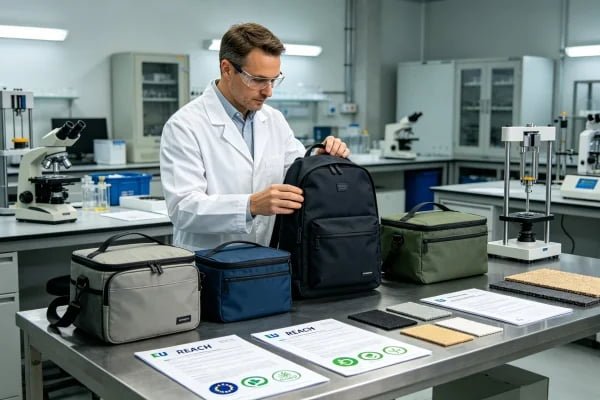
Imported bags must meet REACH requirements regarding restricted chemicals such as:
- Lead
- Cadmium
- Phthalates
- AZO dyes
Failure to comply may result in customs rejection, product recalls, or financial penalties.
EPR Requirements
Spain continues to strengthen its Extended Producer Responsibility (EPR) framework4.
Importers may be responsible for:
- Packaging waste obligations
- Recycling compliance
- Environmental reporting
Using recycled materials such as RPET can help simplify compliance requirements.
Social Audits
Many Spanish retailers and distributors require suppliers to provide social compliance certifications, including:
- BSCI Audit
- SMETA Audit
Working with audited factories often improves supplier approval rates and reduces sourcing risks.
How to Reduce Import Costs
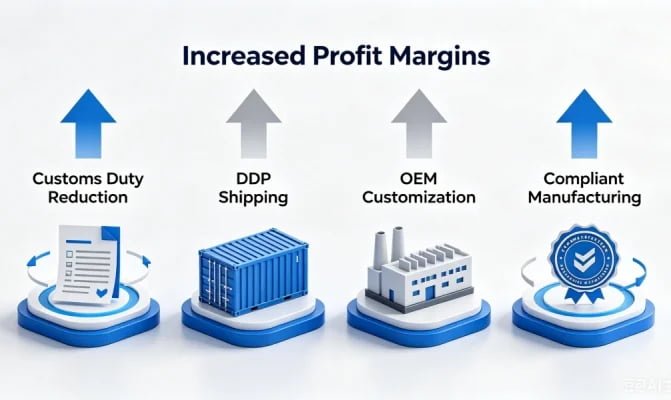
1. Use Accurate HS Codes
Correct product classification helps avoid:
- Unnecessary duties
- Customs disputes
- Cargo inspections
- Clearance delays
Always verify classifications before shipment.
2. Consider DDP Shipping
DDP (Delivered Duty Paid) shipping provides:
- Predictable landed costs
- Simplified customs procedures
- Reduced administrative workload
For many European buyers, DDP is one of the easiest ways to streamline imports.
3. Focus on Customized Products
Competing solely on low-cost commodity products often leads to shrinking margins.
Customized products allow brands to achieve:
- Higher selling prices
- Stronger brand positioning
- Better profit margins
Private label and OEM products can absorb import-related costs more effectively.
4. Work with Compliance-Ready Factories
Experienced manufacturers can provide:
- REACH declarations
- BSCI Audit
- SMETA Audit
- Material certificates
- Audit reports
- Complete export documentation
This significantly reduces the risk of customs delays and compliance issues.
Case Study: A Spanish Distributor Saved 12%
One of our Spanish promotional product clients sourced 8,000 custom cooler bags from our factory.
Challenges
- Rising freight costs
- Import duty concerns
- Strict retailer compliance requirements
Solutions
- Optimized material selection
- Accurate HS code classification
- DDP shipping arrangement
- REACH-compliant materials
Results
✅ Saved over €3,500 in import-related costs
✅ Cleared customs without delays
✅ Improved delivery reliability
✅ Accelerated retailer approval processes
This case demonstrates that effective sourcing strategies can often save more money than simply negotiating lower factory prices.

Why European Buyers Choose Kai Bags
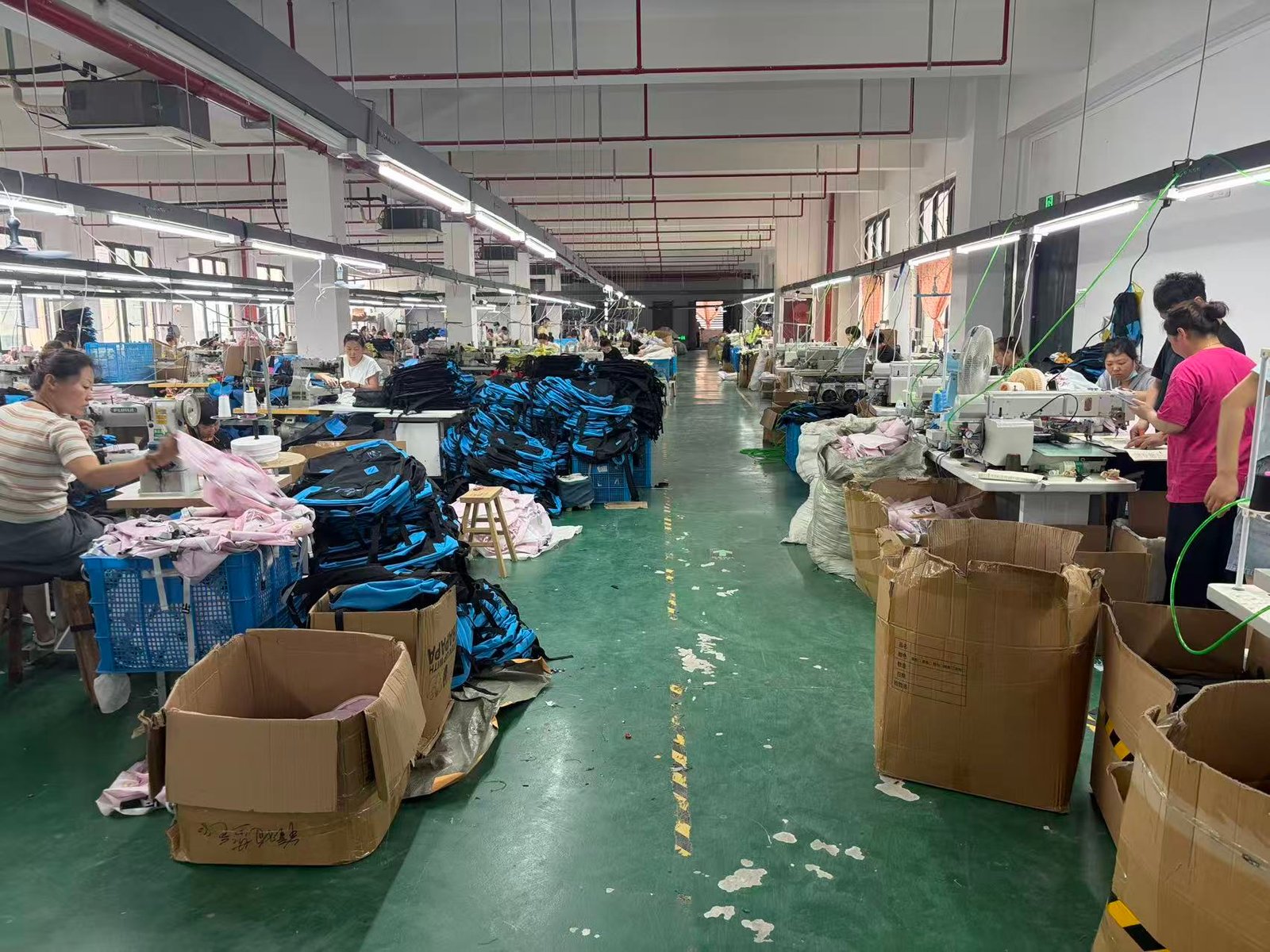
For over 20 years, Kai Bags has helped importers, wholesalers, and brands develop custom bag solutions for global markets.
Our Advantages
- 20 Years Manufacturing Experience
- BSCI & SMETA Audited Factory
- REACH-Compliant Materials
- Monthly Capacity Over 100,000 Units
- OEM & ODM Services
- DDP Shipping Support Across Europe
- Professional Documentation Assistance
We help customers reduce sourcing risks while maintaining competitive product costs.Click on Reference Brand Cases
Frequently Asked Questions
What is the import duty on bags in Spain?
Most bags imported into Spain are subject to duties ranging from approximately 3.7% to 9.7%, depending on product classification.
What IVA applies to imported bags?
Spain currently applies a standard 21% IVA on imported goods.
Can I import bags from China under DDP terms?
Yes. Many suppliers offer DDP shipping solutions that simplify customs clearance and provide predictable landed costs.
What documents are required for customs clearance?
Typically, importers need:
- Commercial Invoice
- Packing List
- Bill of Lading
- HS Code Information
- Compliance Documentation
How can I legally reduce import costs?
The most effective methods include:
- Accurate HS classification
- DDP shipping
- Product customization
- Working with experienced compliance-ready suppliers
Get a Free Spain Import Cost Estimate
Planning to import bags into Spain in 2026?
Simply send us:
- Product type
- Quantity
- Destination city
Our team will provide within 24 hours.:
✅ Factory-direct quotation
✅ Estimated duty reference
✅ Shipping recommendations
✅ OEM/ODM proposal
✅ DDP cost analysis
Whether you need custom cooler bags, lunch bags, backpacks, tote bags, travel bags, or promotional products, our team is ready to help you build a more profitable and compliant supply chain.
Contact us today for a free quotation, sourcing consultation, and import cost estimate.
"China Trade Statistics | WITS", https://wits.worldbank.org/countryprofile/en/chn. Trade statistics from various national customs authorities show China maintains a significant share of global bag and luggage exports, reflecting its manufacturing capacity and cost competitiveness in this sector. Evidence role: statistic; source type: government. Supports: China's position in global bag manufacturing and exports. Scope note: Cost-effectiveness varies by product type, quality requirements, and market conditions ↩
"Tracking the Economic Effects of Tariffs | The Budget Lab", https://budgetlab.yale.edu/research/tracking-economic-effects-tariffs. Academic research on international trade demonstrates that import duties, taxes, and compliance costs represent significant components of total landed costs that directly affect importer profit margins and pricing strategies. Evidence role: general_support; source type: research. Supports: the impact of import costs on business profitability. Scope note: Impact varies significantly by product category, business model, and market positioning ↩
"Regulating Imports with a Reciprocal Tariff to Rectify Trade Practices ...", https://www.whitehouse.gov/presidential-actions/2025/04/regulating-imports-with-a-reciprocal-tariff-to-rectify-trade-practices-that-contribute-to-large-and-persistent-annual-united-states-goods-trade-deficits/. As an EU member state, Spain implements the Common Customs Tariff established by European Union customs regulations. Evidence role: general_support; source type: government. Supports: Spain's participation in the EU Common Customs Tariff system. ↩
"Policies to Achieve Spain's Climate Objectives - IMF eLibrary", https://www.elibrary.imf.org/view/journals/018/2025/079/article-A001-en.xml. Spanish environmental authorities have implemented various EPR measures as part of EU waste management directives and national environmental policy objectives. Evidence role: general_support; source type: government. Supports: Spain's ongoing development of Extended Producer Responsibility policies. Scope note: Specific recent policy changes would require current legislative documentation ↩