Best-Selling Soft Cooler Bags in 2026: Key Features Every B2B Reseller Should Know
Introduction
The global outdoor and consumer goods market is witnessing a major shift. Bulk buyers, e-commerce brands, and corporate sourcing managers are moving away from heavy, rigid plastic coolers. In their place, high-performance soft-sided cooling solutions have become one of the fastest-growing product categories worldwide.
For international distributors, Amazon sellers, outdoor brands, and promotional product companies, adding a best-selling soft cooler bag for wholesale to your product lineup can be a highly profitable opportunity. However, many B2B resellers struggle with slow-moving inventory, high return rates, and increasing competition because they focus solely on price while overlooking the product features that consumers actually value.
To build a high-margin product catalog, buyers need to understand the specifications, materials, and design details that drive retail success. This guide explores the essential features of top-performing cooler bags, analyzes market demand by application, highlights customization trends, and provides practical sourcing advice for B2B buyers.
Why Soft Cooler Bags Have Become Top-Selling Wholesale Products
The growing popularity of soft cooler bags is driven by both consumer demand and supply chain advantages.
| Logistics & Supply Chain Advantages | Consumer Demand Drivers |
|---|---|
| Collapsible designs lower freight costs | Growth in outdoor recreation1 |
| Maximizes container utilization | Increasing camping participation |
| Reduces warehouse costs | Rising food delivery demand |
| Lower fulfillment expenses | Popular promotional gift category |
Shipping and Warehousing Efficiency
Unlike hard coolers, soft cooler bags can be folded and packed efficiently, reducing ocean freight costs and warehouse storage requirements.
Outdoor Recreation Growth
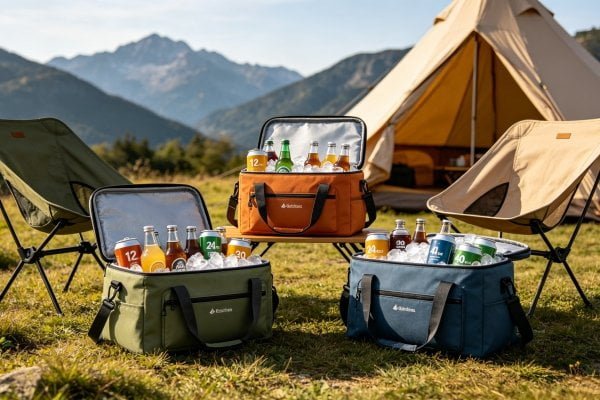
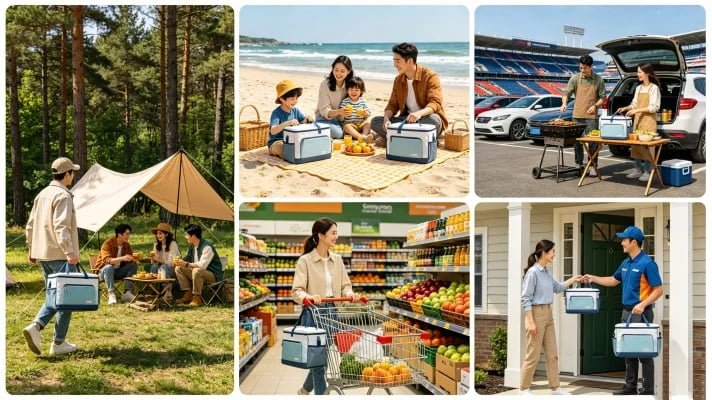
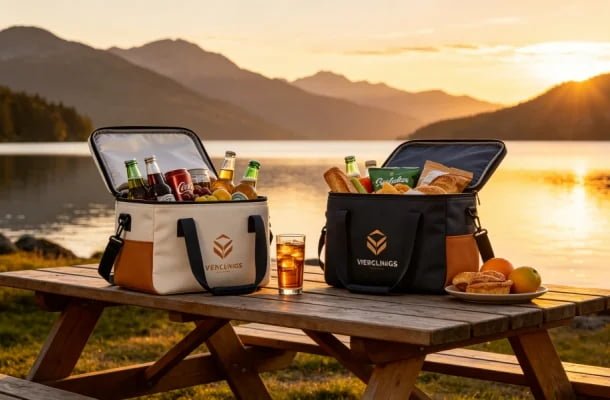
Camping, beach trips, tailgating, fishing, road trips, and family picnics continue to grow in popularity throughout North America and Europe, creating consistent demand for portable cooling solutions.
Commercial and Everyday Applications
Beyond outdoor use, soft cooler bags are increasingly used for grocery shopping, meal delivery, catering services, corporate gifts, and promotional campaigns, creating year-round demand across multiple industries.
Core Features of Best-Selling Soft Cooler Bags
To successfully market a premium portable soft cooler bag, your products should meet the quality expectations of today's consumers.
1. Premium Thickened Thermal Insulation Structure
Insulation performance remains the single most important factor in cooler bag quality.
Low-cost products often use thin 2–3mm foam, providing limited cooling performance. Best-selling models generally feature:
- Weather-resistant outer fabric
- 5–8mm high-density EPE or NBR closed-cell foam2
- Food-grade PEVA3 or TPU inner lining
This multi-layer construction can help maintain cooling performance for 12–24 hours4 when used with ice packs.
2. Leakproof and Waterproof Construction
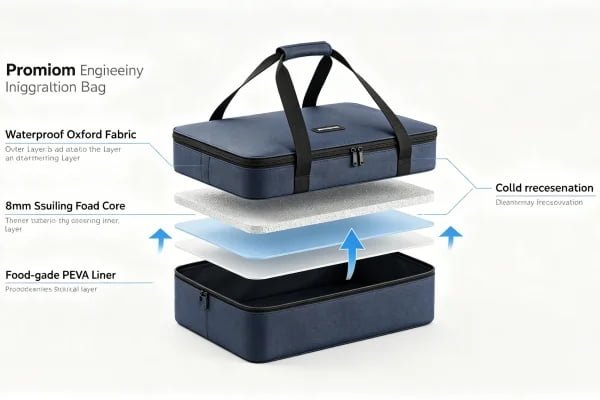
Leakage is one of the most common causes of negative customer reviews.
Premium soft coolers utilize:
- Heat-sealed PEVA or TPU liners5
- High-frequency welding technology6
- Water-resistant outer fabrics
- Durable waterproof coatings
This construction significantly reduces leakage risks and improves long-term durability.
Typical Cooler Bag Structure
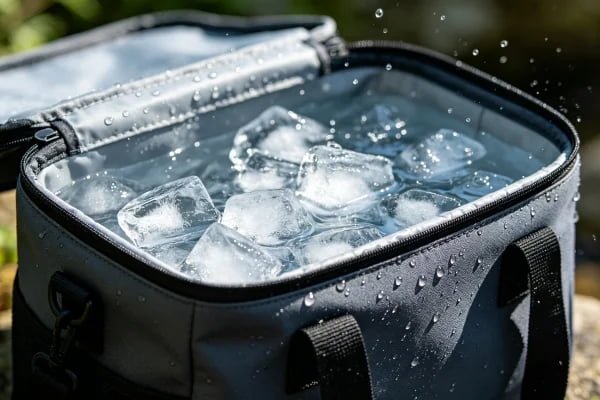
[Water-Repellent Outer Fabric]
           ↓
[5-8mm High-Density Insulation Foam]
           ↓
[Heat-Sealed Food-Grade PEVA/TPU Liner]
           ↓
[Leakproof Interior Chamber]
3. Reinforced Load-Bearing Design
Consumers frequently fill cooler bags with beverages, ice, groceries, and outdoor supplies.
Best-selling products typically include:
- X-box reinforced stitching7
- Heavy-duty webbing support
- Reinforced carrying handles
- Durable buckles and hardware
These upgrades improve durability and reduce product failures.
4. Humanized Portable Structure
Portability is a major advantage of soft coolers.
Popular features include:
- Adjustable shoulder straps
- Padded carrying systems
- Dual grab handles
- Foldable construction for storage
5. Upgraded Internal Organization
Consumers increasingly expect more than a single storage compartment.
Top-selling designs often include:
- Dry and wet separation compartments
- Front accessory pockets
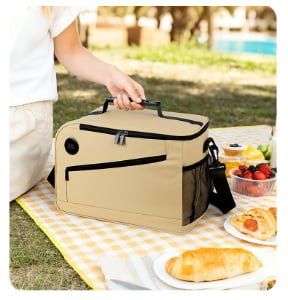
- Side mesh bottle holders
- Interior divider systems
6. Versatile Multi-Scenario Compatibility
The most successful cooler bags serve multiple purposes.
Consumers use them for:
- Camping
- Beach trips
- Fishing
- Grocery shopping
- Food delivery
- Sporting events
- Corporate promotions
Products that fit naturally into multiple lifestyles typically achieve higher retail conversion rates.
Most Popular Soft Cooler Bag Capacities in 2026
One of the most common sourcing mistakes B2B buyers make is selecting cooler bags based solely on appearance rather than actual usage scenarios.
Capacity directly impacts customer satisfaction, retail conversion rates, and repeat purchases.
Based on our experience supplying cooler bags to Amazon sellers, outdoor brands, and distributors, the following sizes remain the most popular in the North American market.
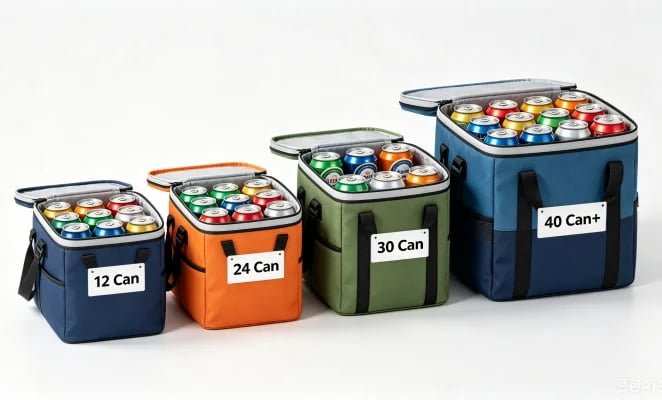
| Capacity | Typical Use | Best For | Target Customers |
|---|---|---|---|
| 12 Can Cooler | Daily Carry | Lunches, office use, short trips | Office workers, students |
| 24 Can Cooler | Family Size | Picnics, beach outings | Families |
| 30 Can Cooler | Large Capacity | Camping, tailgating, road trips | Outdoor enthusiasts |
| 40 Can+ Cooler | Extra Large | Extended camping, fishing, commercial delivery | Professional users |
Which Capacity Sells Best?
For most B2B resellers, 24-can and 30-can cooler bags generate the highest sales volume because they offer the best balance between portability, storage capacity, and shipping efficiency.
If you're targeting Amazon, outdoor retail stores, sporting goods retailers, or promotional buyers, these two capacities should be the foundation of your product assortment.
Market-Based Product Differentiation for B2B Resellers
Different markets require different product specifications.
| Target Market | Key Requirements | Recommended Specifications | Customization Options |
|---|---|---|---|
| Outdoor & Camping | Durability, long ice retention | TPU shell, 8mm insulation, waterproof zippers | Rugged colors, MOLLE webbing |
| Food Delivery | Easy cleaning, load support | Reinforced base, leakproof liner | Reflective strips, branded printing |
| Promotional Gifts | Attractive appearance | Lightweight structure, premium finish | Embroidery, heat transfer logos |
| Family & Grocery | Portability, affordability | Foldable design, medium capacity | Retail-friendly color options |
Real Customer Case: How an Amazon Seller Reduced Return Rates
Last year, one of our Amazon clients in Texas approached us after receiving increasing customer complaints about insulation performance and leakage issues.
Their original cooler bag featured:
- Thin 3mm foam insulation
- Stitched PEVA lining
- Standard shoulder strap construction
Common customer complaints included:
- Ice melting too quickly
- Water leakage
- Weak shoulder straps
- Limited durability
After reviewing the product, we recommended three upgrades:
✔ Upgrading insulation from 3mm to 8mm high-density foam
✔ Replacing stitched liners with heat-sealed leakproof PEVA
✔ Reinforcing strap attachment points with X-box stitching
After launching the upgraded version, the client reported:
- Higher customer satisfaction
- Reduced return requests
- Improved product ratings
- Increased repeat orders
This project reinforced a valuable lesson for B2B buyers: investing slightly more in product performance often generates stronger long-term profitability than competing solely on price.
2026 Customization Trends for Branded Soft Cooler Bags
As competition increases, customized products are becoming essential for brand differentiation.
Logo Customization
- Screen printing
- Embroidery
- Rubber patches
- Woven labels
- Heat transfer printing
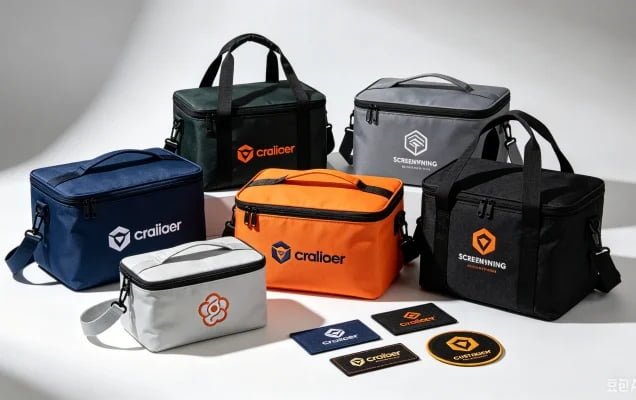
Material Upgrades
- RPET recycled fabrics8
- TPU waterproof materials
- Heavy-duty Oxford fabrics
Custom Color Matching
Popular color trends include:
- Olive green
- Desert tan
- Sage green
- Charcoal grey
- Custom Pantone colors
Functional Upgrades
- Removable dividers
- Waterproof zippers
- Bottle openers
- Dry storage compartments
- Reinforced base panels
Common Reseller Sourcing Mistakes to Avoid
Choosing Price Over Performance
Extremely low-cost products often generate higher return rates and negative reviews.
Ignoring Liner Construction
Stitched liners are significantly more likely to leak than heat-sealed liners.
Overlooking Hardware Quality
Poor-quality zippers, buckles, and shoulder straps frequently fail under load.
Working with Inflexible Suppliers
Suppliers without OEM and ODM capabilities can limit future growth opportunities.
Why Work With Us
Choosing the right manufacturing partner is just as important as selecting the right product specifications.
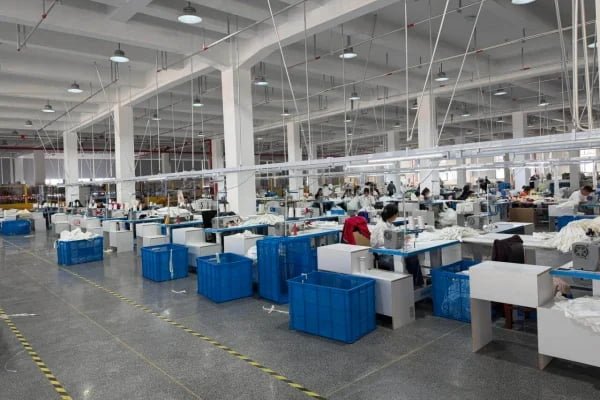
20 Years of Manufacturing Experience
Extensive experience producing cooler bags, lunch bags, backpacks, tote bags, and promotional products for international markets.
Flexible OEM & ODM Services
Support for custom logos, materials, insulation upgrades, hardware modifications, packaging, and structural customization.
Fast Sampling
Professional sample development helps brands validate products before mass production.
Stable Production Capacity
Reliable manufacturing systems ensure consistent quality across both small and large orders.
Dedicated Project Support
Our team provides practical recommendations on materials, capacities, branding methods, and product positioning throughout the sourcing process.
Soft Cooler Bag OEM Quick Facts
| Item | Details |
|---|---|
| MOQ | 500 PCS |
| Sample Time | 5–7 Days |
| Production Time | 20-30 Days |
| Logo Options | Screen Printing, Embroidery, Rubber Patch, Heat Transfer |
| Insulation Options | EPE Foam, NBR Foam |
| Capacity Range | 12 Can – 40 Can+ |
| OEM Service | Available |
| ODM Service | Available |
| Export Markets | North America, Europe, Australia |
For brands looking to test products before bulk production, sampling is highly recommended.
Frequently Asked Questions
How long can a soft cooler bag keep items cold?
Depending on insulation thickness, ice packs, and ambient temperatures, premium soft cooler bags can maintain cooling performance for approximately 12–24 hours.
What is the best insulation material for cooler bags?
High-density EPE foam and NBR closed-cell foam are among the most widely used insulation materials due to their excellent thermal performance and cost-effectiveness.
Are soft cooler bags completely leakproof?
Premium models with heat-sealed PEVA or TPU liners provide excellent leakproof performance and significantly reduce leakage risks.
What capacity is best for family use?
24-can and 30-can cooler bags are generally the most popular choices for family picnics, beach trips, and weekend outdoor activities.
Can I customize my own logo?
Yes. We support screen printing, embroidery, woven labels, rubber patches, heat transfer printing, and various other branding methods.
What is the MOQ for custom soft cooler bags?
Our standard MOQ is 200 pieces, although requirements may vary depending on materials and customization options.
How long does OEM production take?
Production typically takes 20-30 days after sample approval and final order confirmation.
Grow Your Business with High-Performance Cooling Solutions
Global demand for reliable, lightweight, and highly portable soft cooler bags continues to grow across outdoor recreation, food delivery, retail, and promotional markets.
For B2B resellers, success comes from choosing products that combine strong insulation performance, leakproof construction, reinforced durability, and practical everyday functionality.
By investing in better specifications and customized branding opportunities, businesses can improve margins, reduce return rates, and build stronger customer loyalty.
Ready to expand your product line with high-performance soft cooler bags?
Contact our team today to request a product catalog, receive factory-direct pricing, discuss OEM customization options, or start developing your next best-selling cooler bag.
"Outdoor Recreation | U.S. Bureau of Economic Analysis (BEA)", https://www.bea.gov/data/special-topics/outdoor-recreation. Government recreation surveys document increasing participation in outdoor activities, though growth rates vary by specific activity type and demographic group. Evidence role: statistic; source type: government. Supports: participation rates and trends in outdoor recreational activities. ↩
"Types of Insulation | Department of Energy", https://www.energy.gov/energysaver/types-insulation. Materials science research confirms the insulation properties of closed-cell foams, with thermal performance correlating to thickness and density specifications. Evidence role: mechanism; source type: research. Supports: thermal insulation properties of EPE and NBR foam materials at specified thicknesses. Scope note: Performance data may vary based on specific foam formulations and testing conditions ↩
"Packaging & Food Contact Substances (FCS) - FDA", https://www.fda.gov/food/food-ingredients-packaging/packaging-food-contact-substances-fcs. Food safety regulations define approved materials for food contact applications, with PEVA meeting specified safety criteria for temporary food storage containers. Evidence role: definition; source type: government. Supports: regulatory approval and safety standards for materials in food contact applications. ↩
"[PDF] Performance Comparison of Thermal Insulated Packaging Boxes ...", https://digitalcommons.calpoly.edu/cgi/viewcontent.cgi?article=1043&context=it_fac. Thermal testing studies demonstrate cooling retention periods for insulated containers, though actual performance depends on ambient temperature, ice quantity, and usage patterns. Evidence role: mechanism; source type: research. Supports: thermal retention capabilities of insulated containers under controlled conditions. Scope note: Laboratory testing conditions may not reflect real-world usage scenarios ↩
"Hydrophobic Modification of Thermoplastic Polyurethane for ... - PMC", https://pmc.ncbi.nlm.nih.gov/articles/PMC12608959/. Materials engineering research confirms the barrier properties of PEVA and TPU films, with heat-sealed joints typically providing superior leak resistance compared to sewn seams. Evidence role: mechanism; source type: research. Supports: waterproof properties and sealing effectiveness of thermoplastic materials. ↩
"Radio-frequency welding", https://en.wikipedia.org/wiki/Radio-frequency_welding. Manufacturing engineering research confirms that high-frequency welding creates molecular bonds in thermoplastic materials, typically producing stronger seals than adhesive or thermal methods. Evidence role: mechanism; source type: research. Supports: bonding strength and sealing effectiveness of different thermoplastic welding techniques. ↩
"How to Properly Sew a Box X Stitch - Sailrite", https://www.sailrite.com/How-to-Sew-a-Box-X-Stitch?srsltid=AfmBOop_mmjMxREGEXGFI9JnknPxC-FFoi9S89oSoNOjh2VhRxbpHA0n. Textile engineering studies demonstrate that cross-pattern stitching distributes mechanical stress more effectively than linear stitching, improving load-bearing capacity. Evidence role: mechanism; source type: research. Supports: mechanical properties and stress distribution characteristics of different stitching patterns. ↩
"Analysis of Properties of Water-Repellent Fabrics Made from ...", https://jtatm.textiles.ncsu.edu/index.php/JTATM/article/view/20822. Materials research demonstrates that RPET fabrics can achieve comparable performance to virgin polyester in many textile applications, supporting sustainability initiatives in product manufacturing. Evidence role: definition; source type: research. Supports: material properties and performance characteristics of recycled polyethylene terephthalate fabrics. ↩