Cooler Bag Quality Failures: B2B Buyer's Guide to Avoid Returns
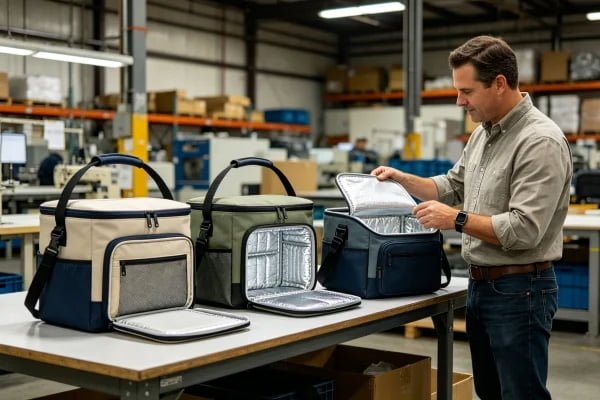
Poor-quality cooler bags can cost you 15%+ in returns. Get our expert checklist for insulation, seams, and hardware to protect your profit margins.
Poor-Quality Cooler Bags Can Cost More Than You Think
For importers, Amazon sellers, retailers, and outdoor brands, a cooler bag is more than just a promotional product—it directly impacts customer satisfaction and profit margins.
A poorly designed cooler bag can lead to:
- High return rates (15%+ is common with low-quality suppliers)
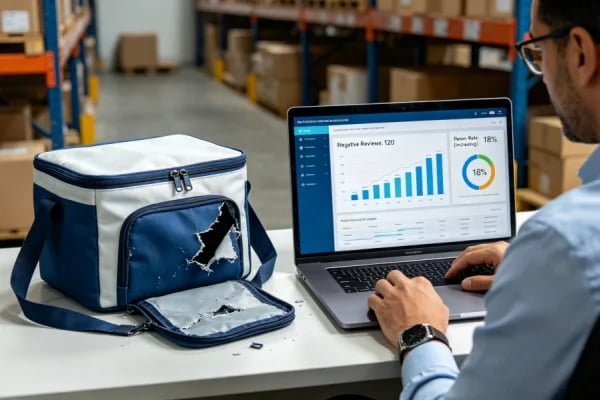
- Negative online reviews (product ratings drop from 4.6★ to 3.8★)
- Retailer complaints (damaged car seats, clothing, wet inventory)
- Increased warranty claims (handle breaks, zipper failures, leaks)
- Damage to brand reputation (hard to recover from)
Many buyers focus heavily on unit price when sourcing cooler bags. However, the lowest-priced supplier often becomes the most expensive choice after product failures start appearing in the market.
The three most common cooler bag failures are:
| Failure Type | symptom | Root Cause |
|---|---|---|
| Insulation Failure | Ice melts within 2 hours1 | Open-cell foam, low density |
| Seam Leakage | Water leaks from inner liner | Stitched PEVA, no RF welding |
| Hardware Damage | Handles/buckles break | Single-line stitching, recycled plastic |
Understanding these risks before mass production can help you avoid costly mistakes and protect your business.
Real Case: Why One Amazon Seller Lost Thousands on a Cooler Bag Order
A U.S.-based Amazon seller sourced over 5,000 cooler bags from a low-cost supplier.
Within two months of launch:
- Return rate exceeded 15%
- Hundreds of customer complaints appeared
- Product rating dropped from 4.6 stars to 3.8 stars
- Advertising costs increased 30%+ to offset declining conversions
After investigation, the problems were traced to:
- Low-density open-cell insulation foam
- Stitched PEVA liner construction
- Weak handle attachment points
The seller later switched to RF-welded liners and higher-density insulation, reducing return rates to below 2%.
The lesson is simple: Quality failures are usually designed into the product long before customers ever receive it.
Risk #1: Insulation Failure
Why Do Some Cooler Bags Lose Ice So Quickly?
One of the most common complaints consumers make is:
"The ice melted within a few hours."
The root cause is usually hidden inside the insulation layer.
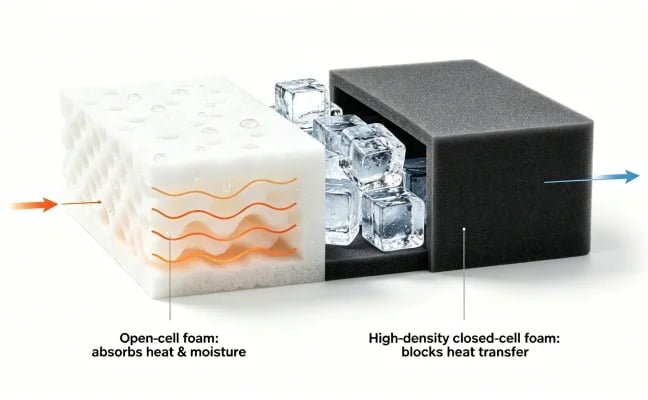
Open-Cell Foam vs Closed-Cell Foam
| Feature | Open-Cell Foam | Closed-Cell Foam |
|---|---|---|
| Moisture | Absorbs moisture | Resists moisture |
| Heat Transfer | Allows heat transfer | Blocks heat transfer |
| Insulation Performance | Lower | Higher |
| Cost | Lower | Higher durability |
| Ice Retention | Typically < 2 hours | 12–24+ hours |
What Buyers Should Require
For retail-quality cooler bags, request:
- ✅ 5mm–8mm closed-cell EPE foam (standard retail)
- ✅ NBR insulation for premium models
- ✅ Food-grade PEVA lining (standard)
- ✅ TPU lining for leakproof premium products
Buyer Inspection Checklist
Before approving samples, ask suppliers:
- ✔ What insulation material is used?
- ✔ What is the foam density? (Request: ≥30 kg/m³)
- ✔ What is the insulation thickness? (Request: 5–8mm)
- ✔ Has the cooler undergone ice-retention testing? (Request test report)
Risk #2: Seam Leakage
Why Do Cooler Bags Leak?
Many factories still use stitched inner liners. Every stitch creates a microscopic hole in the waterproof lining.
Over time:
- Ice melts
- Water accumulates
- Pressure increases
- Leakage begins
This often results in damaged car seats, clothing, and customer dissatisfaction.
Better Solution: RF-Welded Construction
High-quality cooler bags use:
- RF (Radio Frequency) Welding
- High-Frequency Welding
- Ultrasonic Welding
These methods create a continuous waterproof barrier without needle holes.
Risk #3: Hardware Failure
Why Do Handles and Zippers Break?
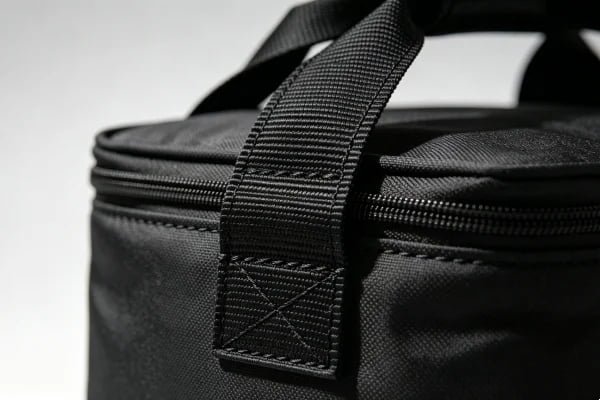
A fully loaded cooler bag can weigh 15–20kg. If the load-bearing structure is poorly engineered, failures occur at:
- Handles
- Shoulder straps
- D-rings
- Zippers
Common Cost-Cutting Methods
Low-end suppliers often use:
- Single-line stitching
- Thin webbing (<1.5mm)
- Recycled plastic buckles
- Standard nylon zippers (#5 or lower)
These components may look acceptable during sampling but fail quickly in real-world use.
Commercial-Grade Solution
Professional cooler bags should include:
- ✅ Wrap-around webbing (2.5mm+ thickness)
- ✅ Box-X reinforcement stitching at stress points
- ✅ Duraflex buckles (brand-certified)
- ✅ Heavy-duty TPU waterproof zippers (#8 or #10)
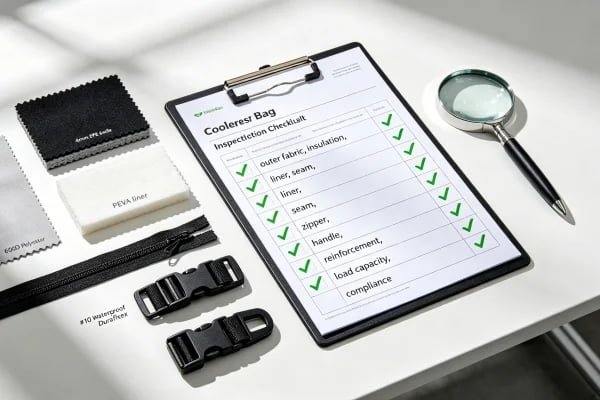
Cooler Bag Quality Inspection Checklist
| Inspection Area | Minimum Requirement | Premium Requirement |
|---|---|---|
| Outer Fabric | 600D+ Polyester | TPU-coated 900D+ |
| Insulation | 5–8mm Closed-Cell EPE | 8mm NBR + Closed-Cell |
| Liner | Food-Grade PEVA | TPU (leakproof) |
| Seam Construction | RF Welded | RF + Ultrasonic Welded |
| Zipper | #8 Waterproof Zipper | #10 TPU Waterproof |
| Handle Structure | Wrap-Around Webbing | Double Webbing + Foam |
| Reinforcement | Box-X Stitching | Box-X + Bar-Tack |
| Load Capacity | 20kg+ | 25kg+ |
| Compliance | REACH / CPSIA | REACH / CPSIA / Prop 65 / FDA |
Emerging Trends in Premium Cooler Bag Development
More brands are moving away from generic promotional coolers and investing in premium customized products.
Popular upgrades include:
🌱 Sustainable Materials
- RPET fabrics (recycled polyester)2
- Recycled insulation materials
- Biodegradable PEVA options
🎯 Dual-Compartment Design
- Cold storage section (insulated)
- Dry storage section (non-insulated)
- Separate utensil pockets
🏔️ Outdoor-Oriented Features
- MOLLE systems for attachments
- Built-in bottle openers
- Waterproof accessory pockets
- Carabiner clips
🏆 Premium Branding
- Rubber logo patches
- Embroidery (3D thread)
- Debossed leather labels
- UV-printed graphics
These features help brands increase retail pricing while differentiating themselves from competitors. (Retail price boost: 30–50%)
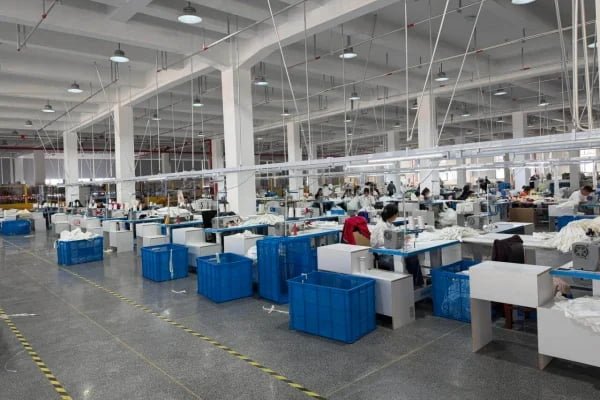
Why Leading Brands Choose Our Manufacturing Team
We help brands reduce quality risks before production begins.
Our Advantages
| Capability | Specification |
|---|---|
| Experience | 20 Years of Bag Manufacturing |
| Global Clients | Over 1,000 Clients Served |
| Development | Full OEM & ODM Support |
| Certification | BSCI Certified Production |
| Capacity | 100,000+ Units/Month |
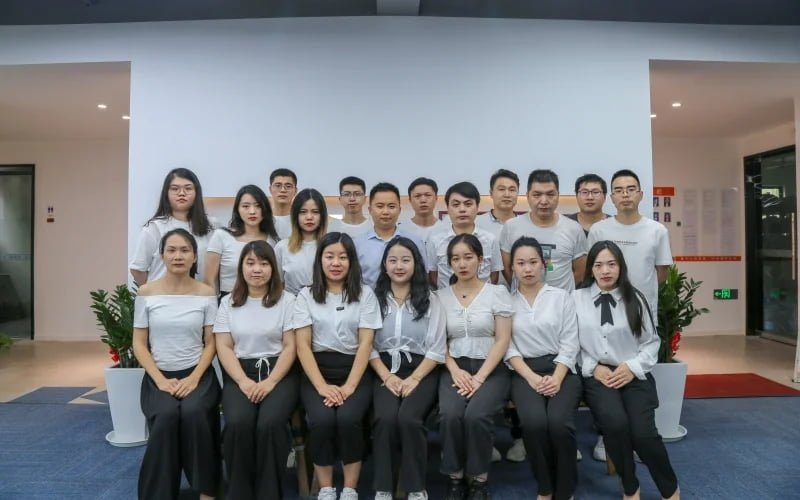
| Team | 7*24 hours experienced dedicated team |
| Quality Control | 7-Step QC Procedures |
Most importantly, we focus on preventing the three major cooler bag failures discussed in this guide before they become costly market problems.
Frequently Asked Questions
How long should a quality cooler bag keep ice?
A well-designed cooler bag with closed-cell insulation should maintain cold temperatures for approximately 12–24 hours under normal outdoor conditions. Premium models with NBR insulation can achieve 24+ hours.
Are welded seams better than stitched seams?
Yes. RF-welded seams provide significantly better waterproof performance than stitched liners. Stitched seams create microscopic holes that lead to leakage over time.
What insulation thickness is recommended?
For most retail applications, 5–8mm closed-cell foam provides a good balance between insulation performance and cost. Premium models use 8mm+ NBR.
What zipper is best for cooler bags?
Heavy-duty TPU-coated waterproof zippers (#8 or #10) are preferred for premium cooler bags. Standard nylon zippers (#5 or lower) will fail quickly.
How can buyers test cooler bag quality?
Recommended tests include:
- Ice retention testing (12–24h target)
- Leakproof testing (IPX7 or higher)
- Load-bearing testing (20kg+ capacity)
- Zipper cycle testing (5,000+ cycles)
Get Your Free Cooler Bag Quality Audit (24h Response)
If you're currently sourcing cooler bags from overseas suppliers, our engineering team can help identify potential quality risks before mass production.
📸 Step 1: Send Us Your Materials
- Product photos
- Existing samples
- Technical drawings
- Product specifications
🔍 Step 2: Our Engineers Analyze
We identify quality risks in:
- Insulation performance
- Leak resistance
- Durability (handle, zipper, buckle)
✅ Step 3: Get Free Assessment
You'll receive:
- Structural quality assessment
- Practical improvement recommendations
- Custom pricing quote
- MOQ & production timeline
👉 Book Free Audit Now | 📞 Call US: +1 13867943946
Contact us today for:
- ✅ Free quotation within 24 hours
- ✅ Custom design consultation
- ✅ Sourcing proposal with MOQ & timeline
- ✅ BSCI-certified production guarantee
"[PDF] Performance Comparison of Thermal Insulated Packaging Boxes ...", https://digitalcommons.calpoly.edu/cgi/viewcontent.cgi?article=1043&context=it_fac. Thermal testing research shows that inadequate insulation materials significantly reduce ice retention times in portable cooling products. Evidence role: mechanism; source type: research. Supports: thermal performance characteristics of different insulation materials in portable cooling applications. Scope note: Specific timeframes depend on ambient conditions and testing protocols ↩
"Thermal and Mechanical Properties of the Recycled and Virgin PET ...", https://pmc.ncbi.nlm.nih.gov/articles/PMC9003056/. RPET (recycled polyethylene terephthalate) is produced by mechanically or chemically recycling post-consumer plastic bottles and containers into polyester fiber for textile applications. Evidence role: definition; source type: research. Supports: the definition and manufacturing process of RPET (recycled polyethylene terephthalate) fabrics. ↩