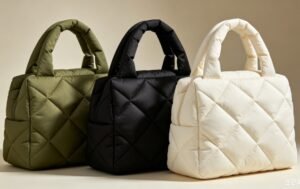
Nylon vs. Polyester: Which Material Is Better for Custom Puffer Tote Bags?
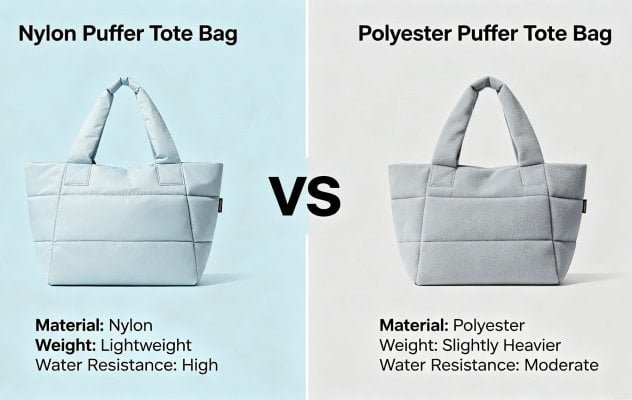
Choosing the wrong fabric can increase costs, reduce profit margins, and even lead to product returns.
If you're developing a custom puffer tote bag collection, one of the first decisions you need to make isn't the logo, color, or zipper—it's the material.
Today, Nylon and Polyester dominate the global puffer bag market, but they serve very different purposes.
Some brands prioritize luxury and premium positioning, while others focus on affordability and high-volume sales.
The right material depends on your business model.
At Kai Bags, we've helped brands, wholesalers, retailers, and promotional companies across the USA, Europe, and Australia manufacture custom puffer bags for more than 20 years.
In this guide, we'll help you choose the right fabric based on your target customers, pricing strategy, and sales channels.
In This Guide, You'll Learn:
- The key differences between nylon and polyester
- Which material is better for your target market
- Cost and profit margin considerations
- Common manufacturing mistakes to avoid
- How to choose the right supplier
Why Material Selection Matters
Many buyers underestimate how much fabric impacts the final product.
The material directly affects:
- Product quality
- Customer satisfaction
- Brand positioning
- Profit margins
- Return rates
A premium fashion brand and a supermarket retailer may sell similar-looking puffer tote bags, but the materials behind them are often completely different.
Choosing the wrong fabric can hurt both your brand image and profitability.
Nylon vs Polyester: Quick Comparison
| Category | Nylon | Polyester |
|---|---|---|
| Premium Appearance | ⭐⭐⭐⭐⭐ | ⭐⭐⭐⭐ |
| Softness | ⭐⭐⭐⭐⭐ | ⭐⭐⭐ |
| Durability | ⭐⭐⭐⭐⭐ | ⭐⭐⭐⭐ |
| Water Resistance | ⭐⭐⭐⭐ | ⭐⭐⭐⭐⭐ |
| Wrinkle Resistance | ⭐⭐⭐⭐ | ⭐⭐⭐⭐⭐ |
| Color Retention | ⭐⭐⭐⭐ | ⭐⭐⭐⭐⭐ |
| Cost Efficiency | ⭐⭐⭐ | ⭐⭐⭐⭐⭐ |
| Best for Premium Brands | ⭐⭐⭐⭐⭐ | ⭐⭐⭐ |
| Best for High-Volume Retail | ⭐⭐⭐ | ⭐⭐⭐⭐⭐ |
Quick Summary:
- Choose Nylon if you sell premium products.
- Choose Polyester if you prioritize cost efficiency and volume.
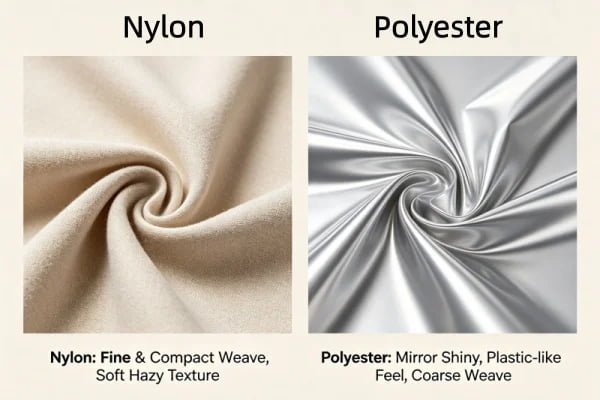
When to Choose Nylon
Nylon is often considered the premium option in the puffer bag industry.
Its soft hand feel and elevated appearance make it popular among fashion brands.
Advantages of Nylon
Softer and More Luxurious Feel
Nylon feels smooth, lightweight, and comfortable.
Consumers often associate it with premium down jackets and high-end fashion accessories.
Better Flexibility
Nylon stretches and recovers more easily under daily use.
This helps reduce stress around handles and stitching areas.
Premium Brand Positioning
Nylon works especially well for:
- DTC brands
- Fashion boutiques
- Lifestyle brands
- Corporate gifting programs
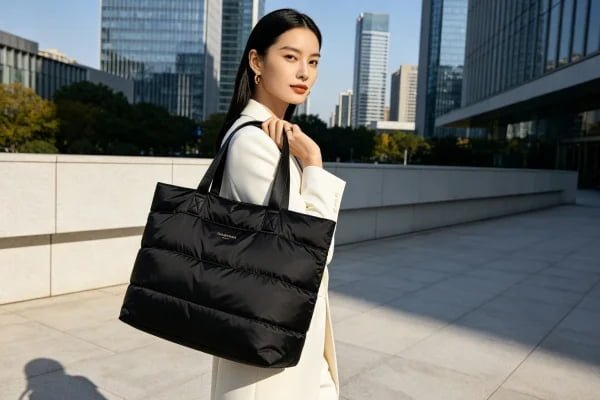
When to Choose Polyester
Polyester dominates high-volume retail programs worldwide.
It offers excellent performance while keeping costs under control.
Advantages of Polyester
More Cost Effective
Polyester can significantly reduce manufacturing costs.
This is ideal for businesses competing in price-sensitive markets.
Excellent Shape Retention
Polyester helps quilted patterns remain crisp and uniform.
Better UV Resistance
Colors stay vibrant for longer periods, especially in outdoor environments.
Polyester is ideal for:
- Amazon sellers
- Promotional companies
- Supermarket chains
- Large retailers
-
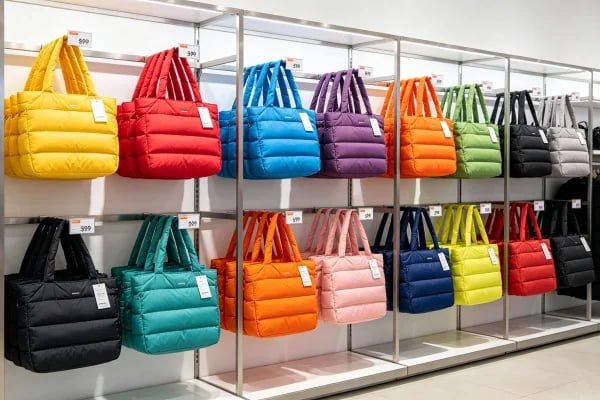
Cost Comparison: How Much Difference Does It Make?
Material selection directly impacts your FOB pricing.
Typical examples:
| Product Type | Estimated FOB Price |
|---|---|
| Basic Polyester Puffer Tote | $3.50–$5.50 |
| Premium Nylon Puffer Tote | $6.50–$9.00 |
The specific price is determined based on different sizes and according to the customization requirements.Nylon usually costs $1.50–$3.50 more per bag than polyester.
However, premium retail positioning often allows brands to charge significantly higher prices.
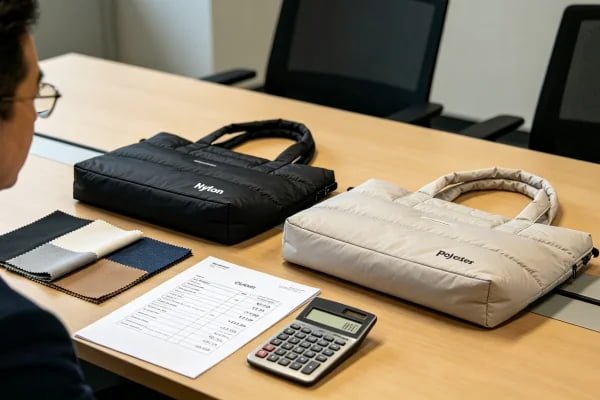
One Manufacturing Problem Most Buyers Overlook
Many factories focus on appearance but ignore long-term performance.
One of the most common problems is fiber leakage.
After weeks of use, filling fibers begin to escape through stitching holes.
This creates a fuzzy appearance and increases customer complaints.
How Professional Factories Solve This Problem
At Kai Bags, we apply a specialized down-proof treatment to create an additional protective barrier between the filling and shell fabric.
This helps:
- Reduce fiber migration
- Maintain a cleaner appearance
- Extend product lifespan
- Lower return rates
This process is applied to both nylon and polyester collections.
How Kai Bags Helps Buyers Choose the Right Material
Material selection shouldn't be complicated.
Our team helps buyers evaluate the best option based on their market positioning.
Factory Advantages
| Item | Details |
|---|---|
| Manufacturing Experience | 20+ Years |
| Monthly Capacity | 100,000 Bags |
| OEM & ODM Service | Available |
| Sample Lead Time | 5–7 Days |
| Production Lead Time | 30–45 Days |
| Certifications | BSCI & SMETA |
| Main Markets | USA, Europe, Australia |
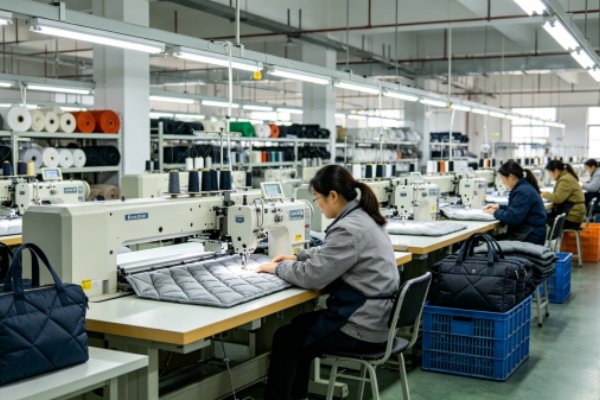
We support buyers from material selection to mass production.
Frequently Asked Questions
Nylon generally offers a softer and more luxurious hand feel.
Which material is more affordable?
Polyester is typically more cost effective.
Which material is better for Amazon sellers?
Polyester is often the preferred choice because of its lower cost and excellent durability.
Which material is better for private-label brands?
Nylon is usually preferred for premium brand positioning.
Can both materials use recycled fabrics?
Yes. Recycled nylon and recycled polyester are widely available.
Need Help Choosing the Right Material?
Not sure whether nylon or polyester is the right choice for your business?
Our team can help you compare both materials before production begins.
Contact Kai Bags For:
✓ Material Recommendations
✓ Pantone Color Matching
✓ Fabric Swatches
✓ Sample Development
✓ Factory Direct Pricing
✓ Production Planning
Let's build a puffer tote bag collection that matches your market, budget, and brand positioning.