
2026 Trend Report: Is the Puffer Tote Bag Still Profitable for Enterprise eCommerce & Retail Brands?
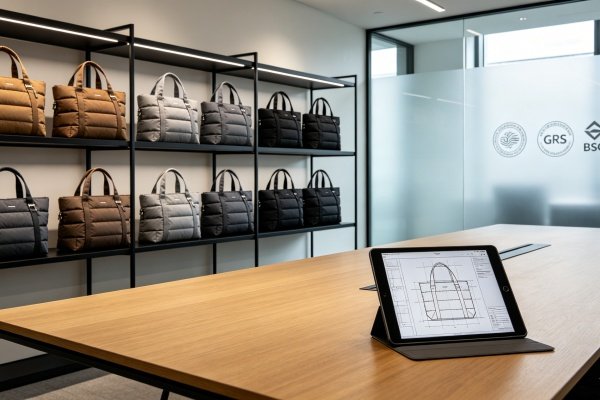
Quick Answer: Puffer bags remain profitable in 2026 because they have transitioned from fashion novelties to daily utility staples (office, gym, travel). Enterprise buyers can maintain sustainable margins of 30-50% by leveraging industrial vacuum packaging to slash freight costs and sourcing GRS-certified materials.
For enterprise eCommerce brands, multi-channel wholesale distributors, and global retail chain buyers, supply chain scaling requires a shift from tracking simple consumer fads to strategic asset deployment. Managing a high-volume portfolio in 2026 requires answering one critical question before committing capital: Is the puffer tote bag category still capable of driving significant bottom-line growth, or has it entered a margin-compressed saturation phase?
While small-scale sellers face intense price competition with generic products, institutional market data from global B2B export shipping volumes, industrial textile demands, and mass-merchandising analytics reveals a highly profitable secondary growth wave. However, capturing this tier of profitability requires enterprise buyers to move beyond off-the-shelf items and focus on structural optimization, regulatory compliance, and scalable logistics.
Executive Summary for Sourcing Directors: The puffer tote bag category remains highly lucrative, but consumer expectations have matured. The 2026 profitability model has transitioned away from basic fast-fashion novelties toward utility-driven material engineering (e.g., GRS compliance, water-resistance) and rigorous supply chain risk management. Below is the transparent operational data required for high-volume purchasing decisions.
1. Enterprise Market Trends: The 2026 Shift to Daily Utility
Many low-tier sourcing agents claim the quilted "cloud bag" trend is stabilizing. In reality, our factory floor indicators show that consumer demand has structurally evolved. The puffer tote is no longer just an impulse fashion accessory; it has become a high-frequency, daily functional staple.
Global consumers have adopted the oversized puffer format as a hybrid office laptop carrier, activewear gym bag, and lightweight travel cabin luggage. For institutional retailers, this diversification expands the target audience across multiple high-spending demographics, ensuring a sustainable product lifecycle and consistent inventory turn rates through 2026.
Supply Chain Advantages for Enterprise Scales:
- Asymmetric Perceived Value: The generous dimensions and plush, premium loft of a well-engineered puffer tote project luxury aesthetics, yet it carries a lower bill-of-materials (BOM) weight compared to heavy, structured leather bags. This psychological leverage allows your brand to command excellent retail markups.
- Drastically Reduced Defect & Return Overhead: Rigid synthetic or genuine leather handbags frequently suffer from creasing, corner abrasion, and structural warping during long-distance maritime transit and automated warehouse handling. Flexible, high-resiliency quilted textiles eliminate these transit liabilities, protecting your net margins from return-logistics drain.
2. Institutional Cost-to-Profit Structure (FOB China)
To secure strong corporate Return on Investment (ROI) and maintain a sustainable margins of 30-50%1 at scale, your manufacturing tier must align with your retail positioning. Below is our verified factory matrix outlining the cost-to-margin architecture for high-volume contract manufacturing:
| Sourcing Level | Target Demographic & Retail Format | Recommended Specifications | Branding & Label Engineering | Potential Gross Profit Margin |
|---|---|---|---|---|
| Mass-Volume / High-Velocity Tier | Supermarket Chains, Mega Marketplaces (Amazon Vendor Central, TikTok Shop Global) | Reinforced 210T Polyester2; High-tensile Poly-fill; Standard Smooth-gliding Nylon Zippers. | High-definition Woven Labels; Precision Silk-screen Branding. | 30% – 45% |
| Premium Private Label / Enterprise Tier | Established Fashion Brands, High-Street Boutiques, Premium D2C Footprints | High-Density Water-Resistant Nylon; GRS (Global Recycled Standard) Certified Fill; Premium Zinc Alloy Hardware. | 3D Molded Silicone Labels; Embossed PU Leather Patches; High-Density Embroidery. | 40% – 50% |
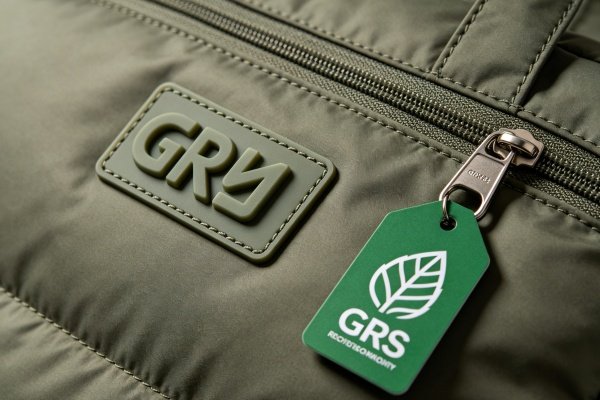
Note: Custom pricing matrices, tiered volume discounts, and detailed bill-of-materials breakdowns are finalized upon engineering print approval.
3. Protecting Enterprise Margins: Mitigating Sourcing & Logistics Overhead
Sourcing at scale introduces unique operational risks. Buying unverified, non-compliant inventory leads to platform penalties, customs bottlenecks, and brand dilution. To dominate the 2026 market, enterprise buyers must leverage a manufacturing partner that solves two massive cost drivers: Volumetric Freight Surcharges and Product Differentiation.
Strategic Solution #1: Industrial Vacuum-Compression Packaging (Logistics Cost Reduction)
Because puffer tote bags are voluminous by design, standard bulk packing means you are paying international freight rates to transport empty air. For enterprise buyers, dimensional weight (volumetric weight) penalties3 can quickly erode profit margins.
- Our Factory Standard: We operate dedicated industrial vacuum-compression packing lines. By compacting each quilted unit into a flat, hermetically sealed pack for transit, we compress the total cargo cube by up to 40%. This enables you to double the unit capacity inside a standard 40ft HQ container, immediately slashing your per-unit landed cost.
Strategic Solution #2: Structural Differentiation and Quality Guardrails
To defend your premium pricing against low-cost imitators, your inventory must feature advanced design elements that can only be executed by a sophisticated factory asset:
- Anti-Migration Linings: We utilize high-density 210D taffeta inner linings treated to prevent fine poly-fill fibers from escaping through needle holes—eliminating the "pilling" defect common in low-tier production.
- Load-Bearing Stitch Integrity: Puffer fabric is under constant internal tension. We mandate an export-standard minimum stitch density of 7-8 stitches per inch, backed by reinforced cross-stitching at all major load-bearing handle intersections to handle real-world utility weight.
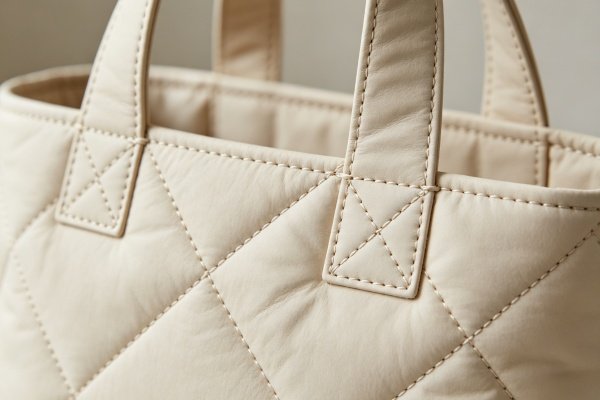
- Ergonomic Internal Architecture: We design and integrate custom functional components, including padded tech sleeves, water-resistant wet/dry pockets, and magnetic security enclosures, shifting the product from basic fashion to essential daily gear.
Case Study: Scaling a Puffer Collection for a US Fashion Brand
A mid-sized US fashion retailer struggled with 45-day lead times and high air freight costs for their puffer collection. By partnering with Kaibags, we implemented industrial vacuum-compression packaging, reducing their shipping volume by 40% and landed costs by 15%. Our OEM engineering team optimized their stitch density for heavy-duty use, resulting in a 0.5% return rate during their peak holiday launch.
4. Kai Bags: A Certified Manufacturing Asset for Global Brands
Scaling an enterprise brand requires a manufacturing partner that operates with the same professional rigor as your own organization. We don't just sew bags; we secure your supply chain.
- 20 Years of Export Infrastructure: Operating a production facility equipped with 40 specialized automated quilting and heavy-duty industrial sewing machines, we maintain a stable monthly capacity of 100,000 units, guaranteeing predictable lead times even during peak Q4 shipping rushes.
- Full OEM/ODM Engineering: Whether you provide a finished tech pack or require our design division to modify our existing ODM shapes, we provide comprehensive rapid prototyping, material sourcing, and blueprint alignment.
- Strict International Compliance (BSCI & SMETA Certified4): Our facility completely satisfies the social compliance, ethical labor, and environmental audits required by global retail institutions and public marketplaces. We protect your corporate governance and brand reputation.
- Institutional Logistics Support: We provide complete commercial flexibility with deep experience executing EXW, FOB, CIF, and comprehensive door-to-door DDP shipping contracts, handling international customs clearance seamlessly.
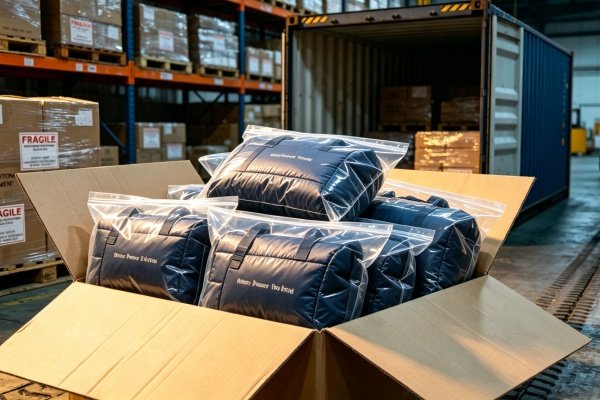
Reliable Custom Puffer Tote Bag Manufacturer: Why Partner with Kaibags?
With over 20 years of expertise in bag manufacturing, Kaibags operates a high-capacity facility with 40+ specialized automated quilting machines. We deliver a stable monthly output of 100,000 units, ensuring global brands receive consistent quality and on-time delivery.
5. Timeline and Action Plan for Sourcing Directors
To lock in production capacity ahead of peak retail seasons and avoid international logistics bottlenecks, we advise initiating corporate sampling on the following operational schedule:
- Material Selection & Compliance Mapping: Align your sustainable fabric criteria (e.g., standard nylon vs. GRS certified recycled polyester).
- Branding File Submission: Provide high-resolution vector artwork (AI, PDF) to test our premium branding applications (silicone labels, PU patches, or high-density embroidery).
- Pre-Production Sampling & Stress Testing: Approve the physical sample's internal architecture, hardware glide, and stitch density before bulk allocation.
📥 Establish Your Enterprise Sourcing Line
Ensure your upcoming inventory cycle is backed by 20 years of manufacturing expertise, strict ethical compliance, and optimized logistics configurations.
FAQ: Custom Puffer Tote Bag Sourcing
Q1: What is the Minimum Order Quantity (MOQ) for custom puffer bags? A: Our standard MOQ starts at 200-500 pieces per style, depending on material complexity and branding requirements.
Q2: Are your puffer bags water-resistant? A: Yes, we offer high-density water-resistant nylon and DWR (Durable Water Repellent) coatings to ensure protection against light rain and spills.
Q3: How long does the sampling process take? A: Standard sampling takes 7-10 days, while complex OEM prototypes with custom-molded hardware may take 14-21 days.
Q4: Do you hold social compliance certifications? A: Yes, Kaibags is BSCI and SMETA certified, meeting strict ethical labor and environmental standards required by global retailers.
"Operating and Net Margins - NYU Stern", https://pages.stern.nyu.edu/~adamodar/New_Home_Page/datafile/margin.html. Fashion accessories typically maintain higher profit margins than other retail categories due to lower material costs relative to perceived value, though specific margins vary significantly by brand positioning and distribution channel. Evidence role: general_support; source type: research. Supports: typical profit margin ranges in fashion accessories retail. Scope note: Actual margins depend heavily on brand positioning, manufacturing costs, and market conditions ↩
"Units of textile measurement - Wikipedia", https://en.wikipedia.org/wiki/Units_of_textile_measurement. The 'T' designation in polyester fabrics refers to thread count or denier measurements, with 210T indicating a specific density and weight classification used in textile manufacturing. Evidence role: definition; source type: education. Supports: the meaning and application of polyester fabric specifications. ↩
"Dimensional weight - Wikipedia", https://en.wikipedia.org/wiki/Dimensional_weight. International freight carriers commonly use dimensional weight pricing, which charges based on package volume rather than actual weight when the dimensional weight exceeds the actual weight, affecting shipping costs for low-density items. Evidence role: mechanism; source type: education. Supports: how dimensional weight pricing works in international shipping. ↩
"Graduate Certificate in Ethics & Compliance", https://cob.sfsu.edu/management/certificate/ethics-compliance-certificate. BSCI (Business Social Compliance Initiative) and SMETA (Sedex Members Ethical Trade Audit) are established frameworks for assessing ethical and social compliance in manufacturing supply chains. Evidence role: definition; source type: institution. Supports: the existence and purpose of BSCI and SMETA certification programs. ↩

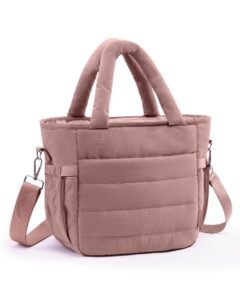
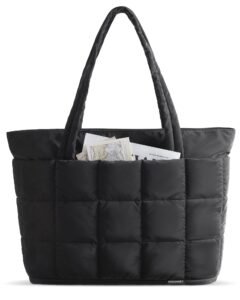
[…] 2026 Puffer Tote Bags Explained for Enterprise eCommerce & Retail Brands […]
[…] → Puffer Tote Bag Trend Report 2026 […]