
Custom Logo Duffle Bags: What Process Details Should Wholesale Buyers Expect?
You want custom logo duffle bags for your business, but the process feels overwhelming with all the technical choices and requirements.
Custom logo duffle bag orders follow a structured process: logo technique selection, sample approval, production setup, and quality control. Success depends on matching your logo method to your intended use and budget, not assuming all customization options deliver the same results or costs.
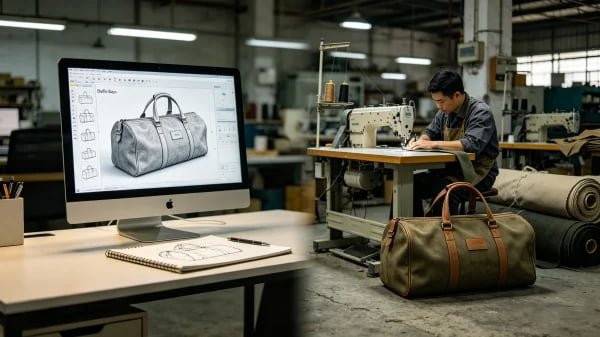
I've guided hundreds of wholesale buyers through this exact process. Each project teaches me something new about what works and what creates problems. Let me walk you through what really happens when you order custom logo duffle bags.
How Do You Choose the Right Logo Technique for Your Duffle Bags?
Different logo techniques create completely different results, even on identical bag styles.
The three main logo techniques - embroidery, heat transfer, and digital printing - each have specific strengths and limitations. Your choice affects durability, appearance, cost per unit, and minimum order requirements differently.
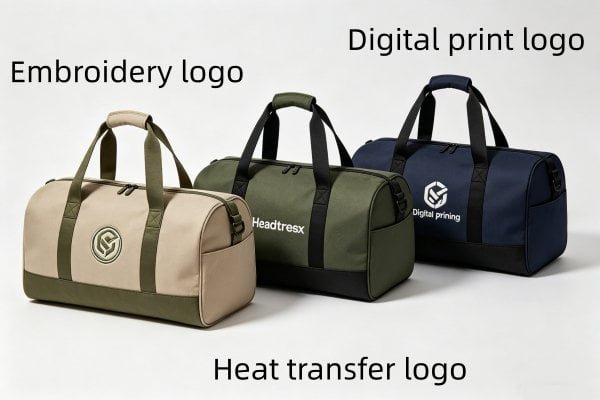
I learned this lesson early in my career when a client insisted on embroidery for a complex logo with tiny text. The result looked muddy and unprofessional. Now I always explain technique limitations upfront.
Embroidery works best for simple designs with bold elements. The thread creates texture and premium feel, but fine details get lost.1 I recommend embroidery for logos with clear shapes and limited colors. The setup cost is higher, but the result looks professional and lasts through heavy use.
Heat transfer handles complex designs better. You can reproduce detailed logos, gradients, and photographic elements. The application process is faster than embroidery, which can reduce labor costs. However, heat transfer may peel or fade with frequent washing or extreme conditions.
Digital printing offers the most design flexibility. You can print full-color logos, photographs, or complex artwork directly onto fabric panels before assembly. This technique works well for promotional bags or one-time events. The durability varies based on the printing method and fabric treatment.
| Technique | Best For | Limitations | Typical MOQ |
|---|---|---|---|
| Embroidery | Simple logos, premium feel | Fine details, color limits | 300-500 pieces |
| Heat Transfer | Complex designs, quick turnaround | Durability concerns | 300 pieces |
| Digital Printing | Full-color artwork, photos | Fabric compatibility | 500+ pieces |
The technique you choose affects more than appearance. Embroidery requires longer setup time because we program the design into our machines. Heat transfer needs special artwork preparation. Digital printing may require fabric pre-treatment. Each step adds time to your project timeline.
What Minimum Order Quantities Should You Expect for Custom Logo Duffle Bags?
MOQ requirements exist for legitimate business reasons, not to make small orders difficult.
Custom logo duffle bag MOQs typically range from 300-500 pieces because setup costs for logo application, pattern cutting, and quality control must be distributed across sufficient units to maintain reasonable pricing.2
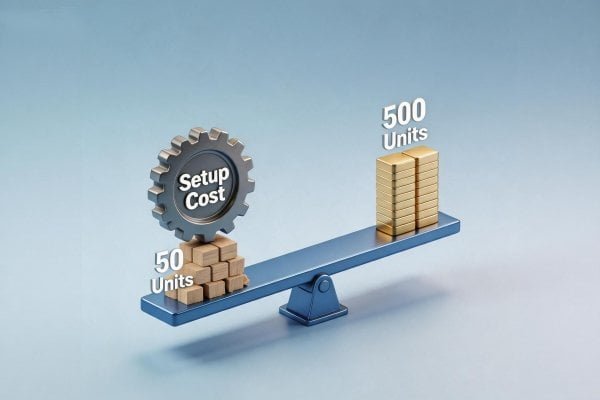
I explain this to every new client because the numbers seem arbitrary until you understand the economics. When we set up embroidery for your logo, the machine programming takes the same time whether we make 50 bags or 500 bags. The setup cost gets divided across all units in your order.
Pattern cutting follows the same logic. We create templates for your specific bag style and size. The cutting dies and setup time cost the same regardless of order size. Small quantities mean higher per-unit costs that price your bags out of the market.
Quality control requires trained staff to inspect each bag and logo application. We maintain quality standards whether inspecting 100 bags or 1000 bags. The inspection process has fixed overhead costs.
Material sourcing also affects MOQ. We buy fabric, zippers, and hardware in bulk to maintain quality consistency and cost control. Special colors or materials often require minimum purchase quantities from our suppliers. These costs get passed through to customer orders.
Some clients ask about "sample runs" or "test quantities" below normal MOQ. I can sometimes accommodate these requests, but the per-unit cost increases significantly. You pay the full setup cost divided by fewer units. This approach makes sense for market testing, but not for ongoing business.
Payment terms also change with order size. Smaller orders typically require full payment upfront because the margin doesn't support extended payment terms. Larger orders qualify for deposit plus balance payment structures.
How Long Does the Complete Custom Logo Duffle Bag Process Actually Take?
Most first-time buyers underestimate total project time by focusing only on production days.
Complete custom logo duffle bag projects typically require 25-35 days from initial contact to delivery, including sampling, revisions, production, and shipping. Pure production time is only 15-20 days of this total timeline.3
I track project timelines carefully because delivery delays create problems for everyone. The confusion usually starts with the difference between "production time" and "total project time." Production is just one phase of your project.
Sample development takes 5-7 days once we receive your complete specifications.4 This includes logo artwork preparation, material sourcing, and sample assembly. Rush samples are possible but cost extra and may compromise quality.
Sample approval often takes longer than expected. Clients need time to evaluate the sample, test durability, and make revision decisions. International shipping adds 3-5 days each direction. Revision rounds can extend this phase significantly.
Order confirmation requires finalizing specifications, payment terms, and delivery schedules. Any changes to materials, colors, or quantities restart parts of the process. I always recommend finalizing all details before production begins.
Production setup includes material procurement, cutting preparation, and quality control planning. Custom materials or colors may require additional lead time from suppliers. We can't start production until all materials arrive and pass incoming inspection.
Actual production takes 15-20 days for most duffle bag orders. This varies with order size, logo complexity, and seasonal demand. Holiday periods or Chinese New Year can extend production schedules.
Final inspection and packaging add 2-3 days after production completion. We inspect finished goods, apply final logo elements if needed, and prepare shipping documents. International orders require additional documentation.
Shipping time depends on your chosen method and destination. Sea freight takes 15-30 days but costs less. Air freight delivers in 5-10 days at higher cost.5 Express shipping reaches most destinations in 3-5 days but is expensive for large orders.
What Cost Factors Affect Your Custom Logo Duffle Bag Investment?
Hidden cost variables often surprise first-time buyers who focus only on base bag prices.
Custom logo duffle bag costs include base bag price, logo application, setup fees, and variables like color count, placement complexity, and order modifications. Experienced buyers specify these details upfront to avoid surprises.
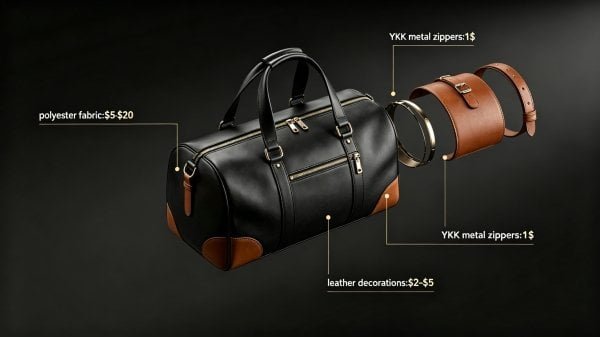
I learned to discuss cost structure early in every conversation because assumptions create problems later. The base bag price is just the starting point. Logo application, setup costs, and specification variables can significantly impact your total investment.
Logo complexity drives application costs. Simple single-color designs cost less than multi-color artwork.6 Embroidery pricing increases with stitch count and color changes. Heat transfer costs vary with design size and color count. Digital printing may require special inks for certain fabrics.
Placement affects both application time and setup costs. Standard positions like front center or side panel are most economical. Multiple logo placements increase labor time and setup requirements. Inside pockets or unusual positions require special handling and increase costs.
Material specifications impact base pricing and customization options. Standard polyester fabrics offer the best value. Canvas or nylon materials cost more but offer better durability. Premium materials may limit logo application options or require special handling.
Hardware choices affect both appearance and cost. Standard zippers and buckles keep costs reasonable. YKK zippers or metal hardware increase material costs but improve quality perception.7 Custom hardware colors or finishes require special sourcing.
Order modifications after confirmation create additional costs. Specification changes may require new samples, material reordering, or production setup changes. I always recommend finalizing all details before confirming orders.
Seasonal demand affects pricing and availability. Peak seasons like back-to-school or holiday periods may increase costs and extend lead times. Off-peak ordering often offers better pricing and faster turnaround.
Quality level choices impact long-term value. Basic construction suits promotional use or one-time events. Commercial grade construction handles regular business use. Heavy-duty specifications support industrial or outdoor applications.
Conclusion
Custom logo duffle bag success requires understanding the complete process, from technique selection through delivery, rather than focusing only on final pricing and production time.
"Your Ultimate Graphics and Embroidery Guide - Printful", https://www.printful.com/graphics-and-embroidery-guide. Textile engineering resources document that embroidery resolution is limited by thread thickness and stitch density, making it optimal for bold designs while fine details may appear unclear due to physical thread constraints. Evidence role: mechanism; source type: education. Supports: technical limitations and characteristics of embroidery on textiles. ↩
"Economic order quantity - Wikipedia", https://en.wikipedia.org/wiki/Economic_order_quantity. Manufacturing economics research demonstrates that MOQs are determined by fixed setup costs that must be amortized across production runs, with typical ranges varying by product complexity and customization requirements. Evidence role: mechanism; source type: research. Supports: economic principles behind minimum order quantities in custom manufacturing. Scope note: General manufacturing principles rather than duffle bag-specific data ↩
"[PDF] Reducing Cycle Time in Frozen Gel-Bag Production", https://dr.lib.iastate.edu/bitstreams/eef04190-a698-4dd8-aa03-effc6c0ad304/download. Manufacturing scheduling research shows that actual production phases typically represent 50-70% of total project timelines in custom textile manufacturing, with the remainder allocated to pre-production and logistics activities. Evidence role: statistic; source type: research. Supports: typical production timeframes in textile manufacturing. Scope note: General manufacturing data rather than specific to duffle bag production ↩
"What is the Typical Product Development Timeline?", https://www.pacific-research.com/what-is-the-typical-product-development-timeline-prl/. Product development research indicates that sample creation in custom manufacturing typically requires 3-10 days depending on product complexity and customization requirements. Evidence role: general_support; source type: research. Supports: typical sample development timeframes in custom manufacturing. Scope note: General product development rather than textile-specific data ↩
"Instant Freight Transit Time Calculator | Air, Ocean & Trucking", https://www.freightos.com/freight-resources/transit-time-calculator/. Transportation statistics from logistics authorities show that ocean freight typically requires 2-6 weeks for international routes while air freight generally delivers within 3-10 days, with specific times varying by origin-destination pairs. Evidence role: statistic; source type: government. Supports: typical international shipping timeframes by transportation mode. Scope note: General shipping data that varies significantly by specific routes and carriers ↩
"Top 10 Factors That Determine How Much a Logo Design Costs", https://webtrics.co.nz/blog/logo-design-cost-factors. Manufacturing cost analysis research demonstrates that decoration complexity directly correlates with production costs due to increased setup time, material usage, and processing requirements for multi-element designs. Evidence role: mechanism; source type: research. Supports: relationship between design complexity and manufacturing costs. ↩
"YKK - Wikipedia", https://en.wikipedia.org/wiki/YKK. Consumer behavior research indicates that established component brands like YKK command premium pricing due to demonstrated quality consistency and positive brand recognition among both manufacturers and end users. Evidence role: general_support; source type: research. Supports: brand reputation effects on quality perception in manufacturing components. Scope note: General brand perception research rather than specific cost-quality analysis ↩