
Where can I have one of my backpack designs fabricated?
You have an amazing backpack design on paper, but finding the right manufacturer feels overwhelming. Most entrepreneurs focus on price first and discover costly mistakes later1.
The key to successful backpack fabrication is matching your design's technical requirements with a manufacturer's specific capabilities before sampling, not just comparing quotes. This prevents expensive production failures and timeline disasters.
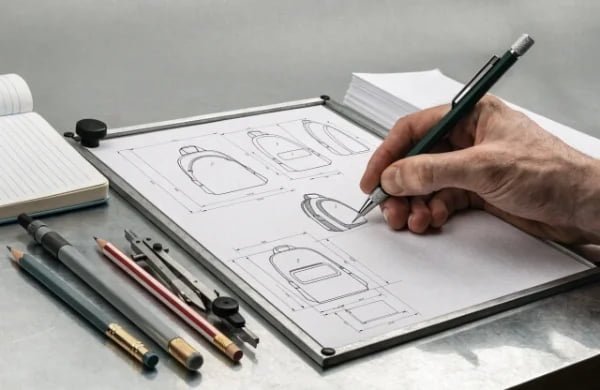
Let me share what I've learned from making backpack production for two decades. The right approach saves you time, money, and stress.
What technical capabilities should I verify before choosing a manufacturer?
Your design complexity determines which manufacturers can actually produce your backpack. Many factories look similar online but have completely different equipment.
Heavy-duty materials, laptop compartments, anti-theft features, and waterproofing require specialized machines and assembly processes. Not every factory has the right equipment for your specific design requirements.
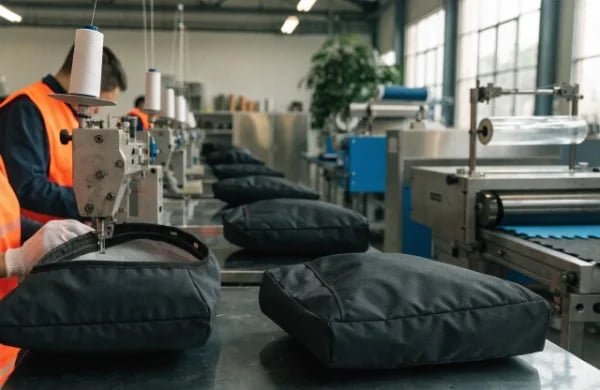
I've seen countless projects fail because clients skipped this step. One entrepreneur spent three months and $5,000 on samples from a factory that couldn't handle his anti-theft design's complexity. The zippers kept breaking during testing.
Here's what you need to verify:
| Design Feature | Required Equipment | Critical Questions |
|---|---|---|
| Laptop padding | Foam lamination machines | Can they handle EVA foam thickness? |
| Waterproof zippers | Tape sealing equipment | Do they have waterproof testing? |
| Heavy-duty materials | Industrial sewing machines | What's their maximum fabric weight? |
| Multiple compartments | Pattern cutting precision | How do they ensure compartment alignment? |
Ask for photos of their production floor. Request samples of similar products they've made. A factory making simple school bags might struggle with technical hiking backpacks.
Our facility handles cutting and sewing because we invested in specific equipment like cutting machine, sewing machine, foam composite machine. But we're honest when a design needs capabilities we don't have.
How important is the sampling process for backpack fabrication?
Sampling reveals problems before they become expensive disasters. I always recommend prototype validation before committing to production quantities.
A proper sampling process catches design flaws, material compatibility issues, and assembly challenges that cost thousands to fix during mass production2. It's your safety net against manufacturing failures.
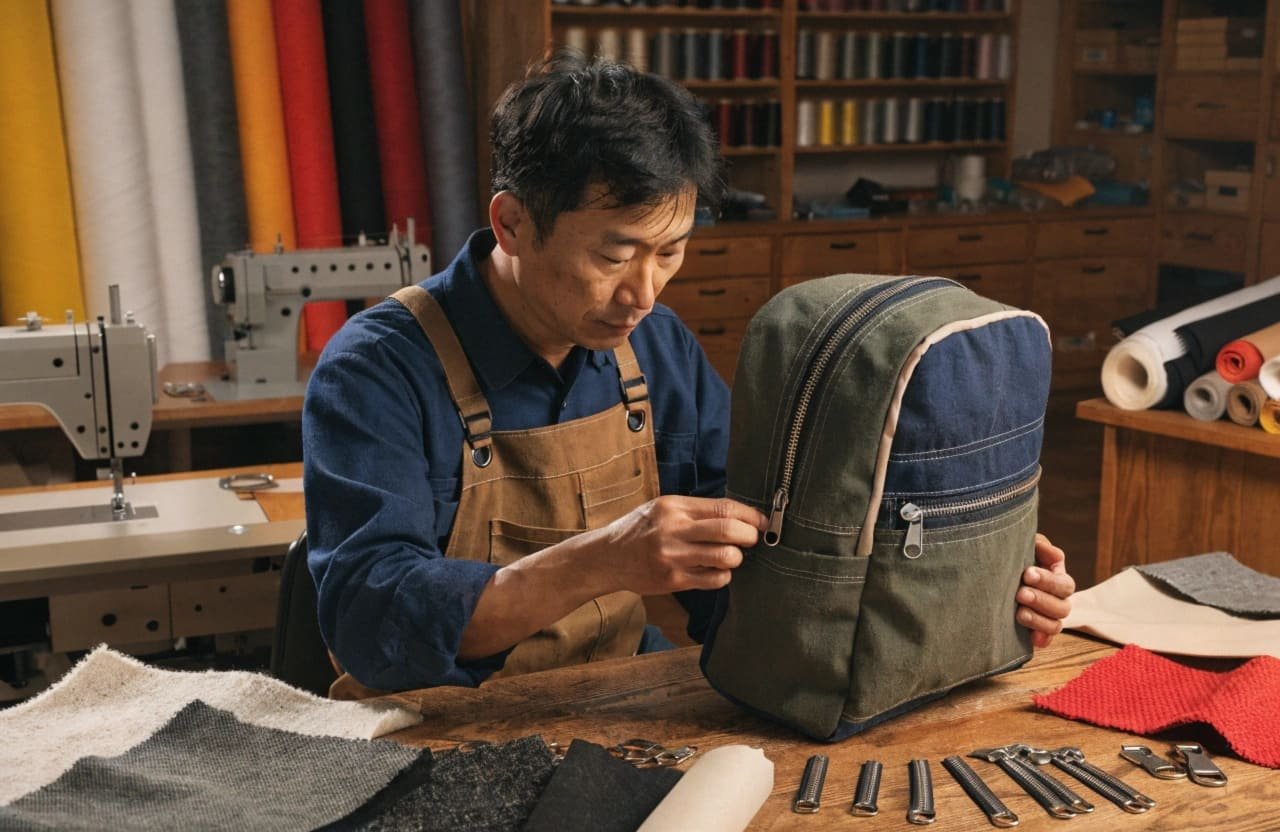
Last year, a client's laptop compartment design looked perfect on paper. The sample revealed the padding compressed unevenly, creating pressure points that could damage electronics. We caught this during sampling, not after producing 1,000 units.
The sampling process should include:
Material Testing Phase:
- Fabric strength under load
- Zipper durability testing
- Hardware stress testing
- Color fastness verification
Assembly Validation:
- Stitching pattern effectiveness
- Compartment accessibility
- Strap attachment strength
- Overall structural integrity
User Experience Testing:
- Weight distribution balance
- Comfort during extended wear
- Access convenience for all compartments
- Real-world functionality assessment
Plan for 2-3 sample iterations. The first sample rarely gets everything right. Each revision refines the design and production process.
We charge for sampling because it involves significant engineering time. But this investment prevents much larger problems later. Approximately 50$ (depending on the actual complexity of the bag) sample fee can save you more than $2,000 in rejected production batches.
What production scale should match my order volume needs?
Factory scale and your order volume must align properly. This affects pricing, attention, and production priority significantly.
Startups with 300-piece orders need different manufacturing partners than established brands ordering 10,000+ units. Mismatched scale leads to poor service or inflated costs regardless of technical capabilities.
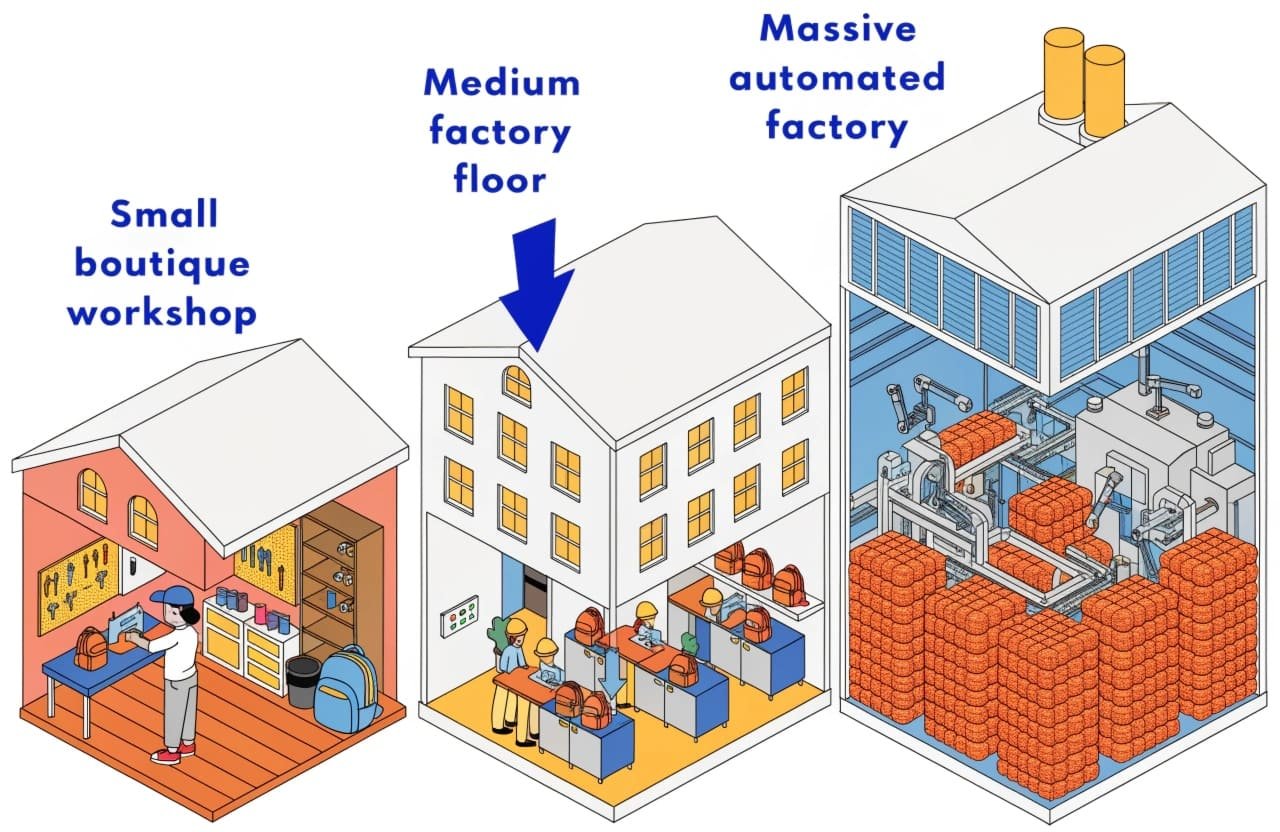
I've managed both scenarios. Large factories often treat small orders as fillers between major contracts3. Small workshops might lack capacity for bigger volumes or consistent quality systems.
Here's how to match your needs:
For 300-1,000 Pieces: Look for smaller specialized manufacturers who value growing relationships. They'll give your project proper attention and competitive pricing for smaller quantities.
For 1,000-5,000 Pieces: Mid-size factories work well here4. They have established quality systems but still treat your volume seriously. This is our sweet spot - enough volume for efficiency, manageable for personalized service.
For 5,000+ Pieces: Larger manufacturers become cost-effective at this scale5. They have sophisticated systems and can handle complex logistics. But ensure you're not just another small client.
Consider growth trajectory too. If you plan to scale quickly, partnering with a manufacturer who can grow with you prevents future disruptions.
We've worked with clients starting at 500 pieces who now order 5,000+ monthly. Building that relationship early created mutual benefits as volumes increased.
How do I evaluate potential manufacturing partners effectively?
Beyond capabilities and scale, evaluate how manufacturers handle communication, quality control, and problem-solving under pressure.
Effective manufacturer evaluation requires testing their communication responsiveness, quality systems documentation, and problem-resolution approach before committing to production partnerships.

Communication reveals everything. Quick, detailed responses to technical questions indicate good internal systems. Vague answers or delayed responses suggest problems you'll face during production.
Ask these specific questions:
Quality Control Systems:
- What inspection points exist during production?
- How do they handle defective units?
- Can they provide quality control documentation?
- What's their defect rate on similar products?
Production Management:
- How do they handle rush orders or delays?
- What backup plans exist for equipment failures?
- How do they communicate production status?
- What happens if materials arrive late?
Post-Production Support:
- How do they handle customer complaints about defects?
- What warranty or guarantee do they provide?
- Can they support future design modifications?
- How do they manage inventory for repeat orders?
Request references from current clients with similar products and volumes. A manufacturer confident in their capabilities will gladly provide references6.
We maintain detailed production records and welcome client facility visits. Transparency in operations indicates confidence in quality and systems.
Conclusion
Success in backpack fabrication comes from matching technical capabilities with your design requirements, validating through proper sampling, and choosing manufacturers at appropriate scale for your volumes.
"Evaluating Key Factors in Supplier Selection for Micro- ...", https://mds.marshall.edu/cgi/viewcontent.cgi?article=1009&context=mgmt_faculty. Research on small business supplier selection indicates that cost considerations often overshadow quality and capability factors in initial decision-making processes. Evidence role: statistic; source type: research. Supports: entrepreneur decision-making patterns in manufacturing partner selection. Scope note: Studies may focus on broader supplier selection rather than specifically manufacturing partnerships ↩
"[PDF] Economics of Manufacturing Machinery Maintenance", https://nvlpubs.nist.gov/nistpubs/ams/NIST.AMS.100-34.pdf. Manufacturing industry studies indicate that design flaws discovered during mass production can cost 10-100 times more to correct than issues identified during prototype phases. Evidence role: statistic; source type: research. Supports: cost benefits of prototype sampling in manufacturing. Scope note: Cost multipliers vary significantly by industry and product complexity ↩
"Order scheduling optimization in manufacturing enterprises based ...", https://pmc.ncbi.nlm.nih.gov/articles/PMC10276033/. Manufacturing operations research documents that production facilities typically prioritize larger orders due to economies of scale and resource allocation efficiency. Evidence role: general_support; source type: research. Supports: manufacturing facility prioritization practices based on order size. Scope note: Prioritization practices vary by facility type and business model ↩
"Federal Reserve Board - Industrial Production and Capacity Utilization", https://www.federalreserve.gov/releases/g17/current/default.htm. Manufacturing efficiency studies suggest that mid-sized facilities often achieve optimal cost-service balance for medium-volume orders due to operational flexibility and resource allocation. Evidence role: general_support; source type: research. Supports: relationship between manufacturing facility size and optimal order volumes. Scope note: Optimal matching varies by industry sector and specific manufacturing processes ↩
"How to Leverage Economies of Scale to Grow Your Platform Business", https://online.hbs.edu/blog/post/economies-of-scale. Manufacturing economics literature demonstrates that economies of scale typically emerge at higher production volumes due to fixed cost amortization and operational efficiencies. Evidence role: mechanism; source type: education. Supports: cost advantages of large-scale manufacturing at higher volumes. Scope note: Scale advantages vary by product type and manufacturing complexity ↩
"[PDF] How to Conduct Thorough Reference Checks - Yale University", https://workday.preview.yale.edu/RSI/FL-HR-126_How_to_Conduct_Thorough_Reference_Checks.pdf. Supplier evaluation research suggests that willingness to provide client references often indicates confidence in service quality and established track record. Evidence role: general_support; source type: research. Supports: reference provision as an indicator of supplier confidence and quality. Scope note: Reference provision willingness may be influenced by factors beyond quality, such as client confidentiality agreements ↩