
Premium vs Budget Canvas Tote Bags (2026): Cost, Quality, ROI & How Buyers Should Choose
Premium vs Budget Canvas Tote Bags: Which One Actually Saves You More Money?
Many buyers make the same mistake.
They compare a $2 canvas tote bag with an $8 premium version and immediately choose the cheaper option.
Six months later, they face:
- Broken handles
- Customer complaints
- Poor product reviews
- Unexpected reorder costs
- Negative brand perception
The cheapest tote bag is often the most expensive decision.
After manufacturing canvas tote bags for more than 20 years, we've learned that successful sourcing isn't about finding the lowest price.
It's about maximizing ROI.
The real question isn't:
Which tote bag costs less?
The real question is:
Which tote bag delivers the best long-term return for your business?
In this guide, you'll learn:
✔ What actually drives the price difference
✔ Why two similar bags can vary by 300% in price
✔ Which businesses should choose premium vs budget options
✔ Hidden costs most buyers ignore
✔ How to calculate total cost of ownership
✔ How to choose the right option for your specific business model
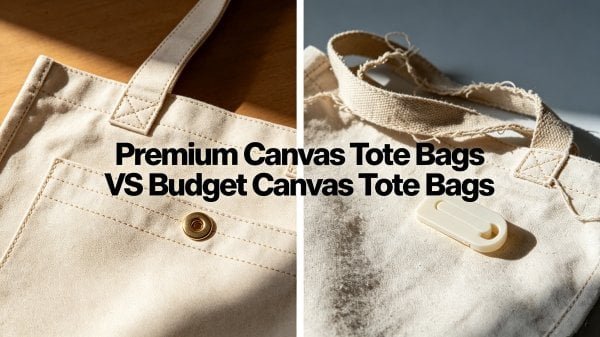
Why This Matters More Than Ever in 2026
The canvas tote bag market has evolved significantly1.
Buyers are no longer purchasing generic promotional bags.
Today's customers expect:
- Better quality
- Longer lifespan
- Sustainable materials
- Premium aesthetics
- Multi-purpose functionality
This trend is especially obvious in:
- Retail brands
- Boutique stores
- Corporate gifting programs
- Lifestyle brands
- University merchandise
- Subscription boxes
Poor-quality bags now damage brand perception much faster than before2.
A tote bag is no longer just packaging.
It has become a brand ambassador.
Premium vs Budget Canvas Tote Bags: Quick Comparison Table
| Factor | Budget Canvas Tote Bags | Premium Canvas Tote Bags |
|---|---|---|
| Price | $2-$5 | $6-$15 |
| Canvas Quality | Standard untreated canvas | Pre-shrunk premium canvas |
| Stitching | Single stitching | Reinforced stitching |
| Handle Attachment | Basic tack stitch | Multi-point bartack |
| Durability | 3-12 months | 2-5 years |
| Appearance | Basic | Premium |
| Brand Perception | Moderate | Strong |
| Best Use Cases | Trade shows, giveaways | Retail, corporate gifts |
| Cost Per Use | Often higher | Usually lower |
What Actually Creates the Price Difference?
Many buyers assume factories simply add extra profit margins.
That's rarely true.
The price gap mainly comes from three factors:
- Construction complexity
- Material quality
- Manufacturing time
Let's break them down.
What Construction Methods Create Price Differences?
Most buyers only compare canvas weight.
This is one of the biggest sourcing mistakes.
Construction determines whether the bag survives months or years.
Budget Construction
Budget bags usually use:
- Single straight stitching
- Basic handle attachment
- Minimal reinforcement
- Simple overlock finishing
This allows factories to produce bags quickly.
Production time:
6-10 minutes per bag
Premium Construction
Premium bags use:
- French seams3
- Multi-point bartacks4
- Double-layer bottom reinforcement
- Bound edge finishing
Production time:
15-20 minutes per bag
The extra labor directly impacts cost.
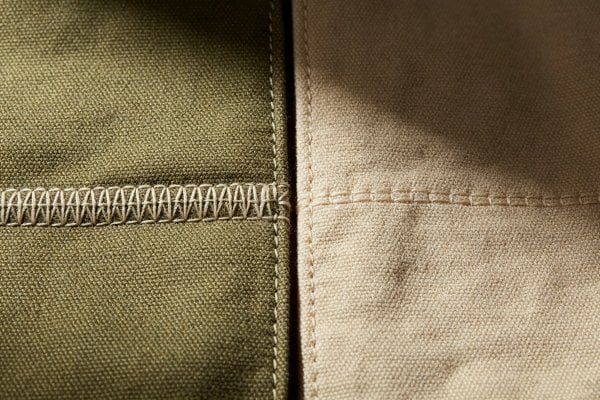
Construction Comparison Table
| Construction Element | Budget | Premium | Impact |
|---|---|---|---|
| Seam Type | Straight stitch | French seam | Better durability |
| Handle Attachment | Basic tack | Multi-point bartack | Higher load capacity |
| Bottom Reinforcement | None | Double layer | Prevents wear |
| Edge Finishing | Overlock | Bound edges | Cleaner appearance |
How Do Material Specifications Impact Performance?
Material quality is often invisible at first glance.
But customers notice it after several weeks.
Premium bags invest heavily in material treatment.
Budget bags usually skip these steps.
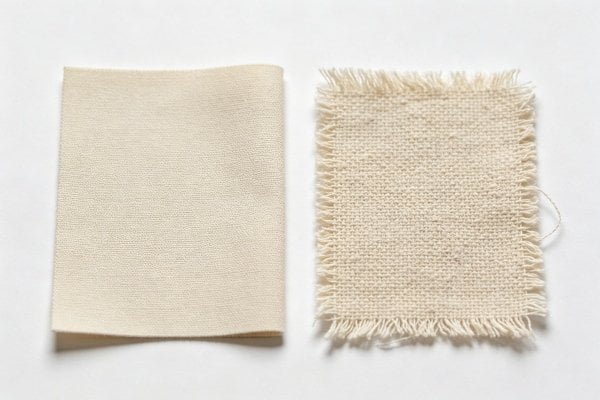
Budget Canvas Materials
Budget canvas usually includes:
- Untreated cotton
- Inconsistent yarn thickness
- No pre-shrinking
- Basic dyeing
Common issues:
- Shrinking after washing
- Color fading
- Wrinkling
- Shape distortion
Premium Canvas Materials
Premium bags use:
- Pre-shrunk cotton
- Colorfast treatment
- Uniform weaving density
- Better fabric finishing
Benefits:
- Better appearance
- Improved longevity
- Better logo retention
- More professional presentation
The Hidden Cost Formula Buyers Ignore
Many procurement teams only compare unit prices.
This is a mistake.
Your calculation should look like this:
Total Cost = Unit Cost + Replacement Cost + Customer Service Cost + Brand Damage Cost + Reorder CostThis changes everything.
Real Example
Scenario A
10,000 budget bags
Unit price: $2.50
Initial investment:
$25,000
Failure rate:
15%
Replacement cost:
$3,750
Customer support costs:
$1,000
Total:
$29,750
Scenario B
10,000 premium bags
Unit price: $7
Initial investment:
$70,000
Failure rate:
2%
Replacement cost:
$1,400
Customer support costs:
$300
Total:
$71,700
Premium costs more upfront.
But cost per use often becomes significantly lower.
Which Businesses Should Buy Premium Canvas Tote Bags?
Premium bags are ideal when brand perception matters.
Best for:
Retail Brands
Customers expect quality.
Cheap bags generate negative reviews.
Boutique Stores
Premium bags become part of the shopping experience.
Corporate Gifts
Gift quality reflects company values.
Employee Onboarding
Employees use bags daily.
Subscription Brands
Packaging becomes marketing.
Which Businesses Should Buy Budget Canvas Tote Bags?
Budget bags still have a place.
Ideal for:
Trade Shows
High volume.
Short-term use.
Event Giveaways
Cost efficiency matters most.
Temporary Campaigns
Maximum reach within budget.
Business Application Comparison
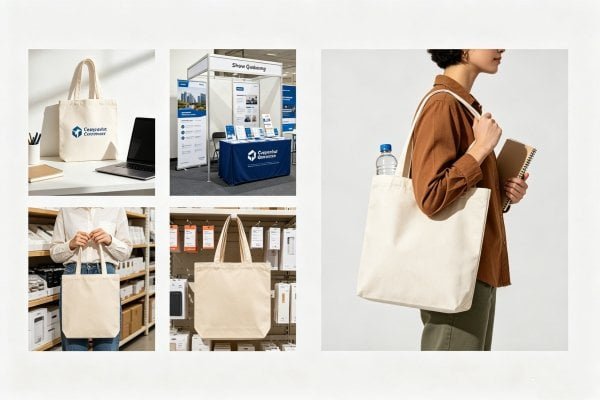
| Application | Recommended Tier | Why |
|---|---|---|
| Trade Shows | Budget | Volume matters |
| Corporate Gifts | Premium | Brand image |
| Retail Stores | Premium | Customer expectations |
| Employee Gifts | Premium | Daily use |
| Internal Events | Budget | Cost control |
| Universities | Premium | Long-term visibility |
The 5 Biggest Buyer Mistakes
Mistake #1: Choosing Only by Price
Cheap today can become expensive tomorrow.
Mistake #2: Ignoring Brand Positioning
Bag quality directly impacts brand perception.
Mistake #3: Ignoring Usage Scenarios
Different use cases require different products.
Mistake #4: Ignoring Shipping Costs
Premium bags can sometimes reduce packaging waste through better durability.
Mistake #5: Buying Premium for Short-Term Events
Over-specification wastes money.
Cost Per Use Is the KPI That Matters
Smart buyers don't calculate cost per bag.
They calculate cost per use.
Example:
Budget Bag
$2.50
20 uses
Cost per use:
$0.125
Premium Bag
$7
150 uses
Cost per use:
$0.046
The premium bag becomes significantly cheaper over time.
Frequently Asked Questions
Yes, if the bags represent your brand, retail products, or long-term promotional campaigns.
What canvas weight is best?
12oz-16oz works for most retail applications5.
10oz-12oz works for promotional campaigns.
Usually yes.
Longer product lifespan reduces waste.
What is a good MOQ for custom canvas tote bags?
Typical MOQs range from 200-500 pieces, depending on customization complexity.
Short-term event campaigns, temporary promotions, and internal distributions usually don't need premium quality.
Related Buying Guides
Continue reading:
- Canvas Tote Bags Buying Guide
- Where to Buy Custom Tote Bags Wholesale
- Canvas Tote Bag Printing Methods Explained
- Canvas Tote Bag MOQ Guide
- Custom Tote Bag Manufacturing Process
- 2026 Tote Bag Trends Guide
Conclusion
There is no universally better option.
There is only the right option for your business.
Budget canvas tote bags maximize reach.
Premium canvas tote bags maximize brand value.
The best buyers don't choose the cheapest bag.
They choose the smartest investment.
Need Help Choosing the Right Canvas Tote Bag?
Our kaibag team can help you select the most cost-effective solution based on your actual market needs.
Tell us:
- Your country
- Your sales channel
- Your target customers
- Your estimated order quantity
We'll recommend the best canvas tote bag specifications for your business.
What You'll Receive
✔ Product recommendations
✔ Material suggestions
✔ MOQ guidance
✔ Logo customization options
✔ Estimated pricing references
✔ Manufacturing advice

"The Facts about Reusable Bags | Stillwater, MN", https://www.stillwatermn.gov/services/garbage-recycling/reducing-waste-through-reuse/the-facts-about-reusable-bags. Industry research on promotional products and reusable bags indicates shifting consumer preferences toward quality and sustainability over the past decade, though specific canvas tote bag market data may be limited to broader bag category trends. Evidence role: general_support; source type: research. Supports: Market evolution in the reusable bag or promotional products sector. Scope note: Support may be contextual, drawn from broader reusable bag or promotional product market analysis rather than canvas tote bags specifically ↩
""Promotional Product Brand Message Effectiveness: A Study of ...", https://scholarsarchive.jwu.edu/jwu_etd/10/. Marketing research demonstrates that tangible product quality significantly influences brand perception, with consumer expectations for promotional items rising alongside general quality standards, though temporal acceleration claims require longitudinal data. Evidence role: expert_consensus; source type: paper. Supports: The relationship between product quality and brand perception in promotional contexts. Scope note: Research may address brand-quality relationships generally rather than specifically demonstrating faster damage in recent years ↩
"Seam (sewing) - Wikipedia", https://en.wikipedia.org/wiki/Seam_(sewing). A French seam is a finished seam that encloses raw fabric edges within the seam itself, providing enhanced durability and a cleaner appearance compared to standard seam construction methods. Evidence role: definition; source type: encyclopedia. Supports: The technical definition and structural advantages of French seams. ↩
"Bar tack - Wikipedia", https://en.wikipedia.org/wiki/Bar_tack. Bartack stitching consists of closely-spaced zigzag stitches that create reinforced attachment points, commonly used in industrial sewing to secure high-stress areas such as bag handles and belt loops. Evidence role: mechanism; source type: education. Supports: The technical function and strength characteristics of bartack stitching. ↩
"Cotton duck - Wikipedia", https://en.wikipedia.org/wiki/Cotton_duck. Canvas weight, measured in ounces per square yard, indicates fabric density and durability, with heavier weights generally providing greater strength and structure for load-bearing applications, though optimal weight depends on specific use requirements. Evidence role: general_support; source type: education. Supports: Canvas weight measurement standards and typical application ranges. Scope note: Technical sources explain weight measurement systems but may not prescribe specific weights for retail tote applications ↩
[…] Premium vs Budget Canvas Tote Bags: Which Pricing Tier Maximizes Your Investment ROI […]