
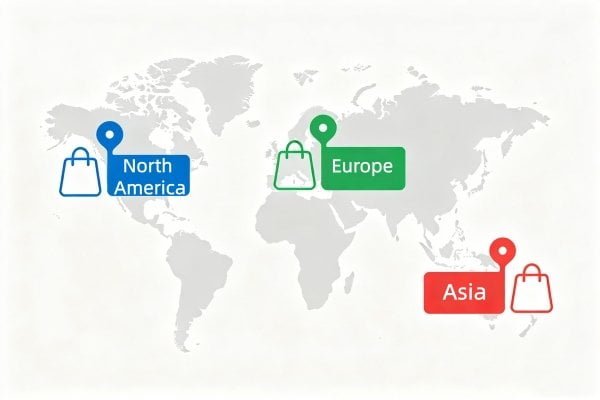
Global Tote Bag Wholesale Guide (2026): Europe vs USA vs Asia Buyer Requirements & Sourcing Strategies
Why Most Tote Bag Factories Fail in Global Markets
Many factories assume that one product strategy works everywhere.
Unfortunately, global buyers don't buy the same way.
A tote bag collection that sells extremely well in Europe may completely fail in North America.
Likewise, products designed for American retailers may struggle to enter Asian markets.
After manufacturing tote bags for global brands over the past 20 years, we've learned one thing:
The most profitable factories don't serve every market. They specialize in markets that match their strengths.
Choosing the wrong market can lead to:
- Customs delays
- Product rejections
- Lost profit margins
- Excess inventory
- Unstable reorder rates
In this guide, you'll learn:
✔ Which global markets are easiest to enter
✔ Which markets generate the highest profits
✔ What buyers in Europe, USA, and Asia prioritize
✔ How to avoid compliance risks
✔ Which regions best match your production capabilities
✔ How to build a long-term sourcing strategy
Which Global Market Should You Target First?
Use this quick decision table.
| Your Situation | Recommended Market |
|---|---|
| New Factory | USA |
| Sustainable Brand | Europe |
| Small MOQ Factory | Europe |
| High Capacity Factory | USA |
| Precision Manufacturer | Asia |
| Long-Term Partnership Model | Asia |
If you're unsure where to begin, North America is often the easiest entry point because buyers prioritize performance and delivery over complex compliance systems.
Europe vs USA vs Asia: Quick Comparison
| Category | Europe | USA | Asia |
|---|---|---|---|
| Compliance Difficulty | Very High | Medium | Low |
| Order Volume | Medium | Very High | Medium |
| Sustainability Demand | Very High | Medium | Medium |
| Seasonal Dependence | Low | Very High | Medium |
| Technical Precision | High | Medium | Very High |
| Long-Term Partnership | High | Medium | Very High |
| Profit Margin Potential | High | Medium | High |
What Makes European Tote Bag Buyers Different?
Europe Is Compliance Driven
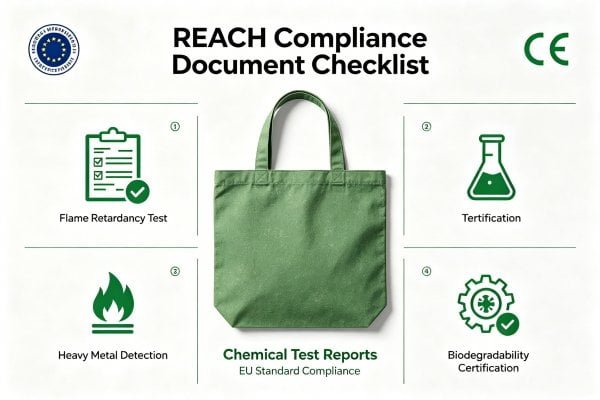
European buyers prioritize compliance before pricing.
Their buying sequence is:
Compliance → Sustainability → Quality → Price
They commonly request:
- [REACH compliance](https://www.trade.gov/eu-reach)1
- Material traceability
- GRS certification
- [OEKO-TEX certifications](https://en.wikipedia.org/wiki/Oeko-Tex)2
- Social audits
Documentation is mandatory.
Missing paperwork can stop entire shipments.
Typical European Buying Characteristics
Order Size
2,000-8,000 pcs
Order Frequency
Frequent repeat orders
Material Preferences
- Organic cotton3
- RPET
- Recycled canvas
- Biodegradable materials
Preferred Markets
- Germany
- France
- Netherlands
- Scandinavia
European Buyer Priorities
| Priority | Importance |
|---|---|
| Compliance | ★★★★★ |
| Sustainability | ★★★★★ |
| Price | ★★★☆☆ |
| Delivery Speed | ★★★☆☆ |
| Documentation | ★★★★★ |
What Makes USA Tote Bag Buyers Different?
USA Buyers Focus On Performance & Timing
American buyers think differently.
Their buying sequence:
Delivery → Performance → Price → Branding
They care about:
- Retail seasons
- Freight efficiency
- Cost optimization
- Product functionality
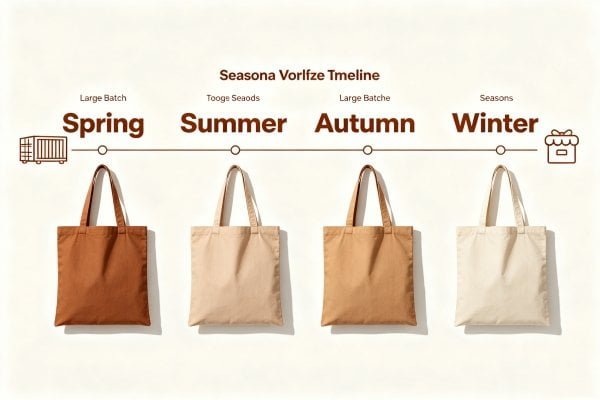
Typical Seasonal Calendar
Spring Collection
Production: October-November
Delivery: December-January
Back To School
Production: February-March
Delivery: May-June
Holiday Season
Production: June-July
Delivery: September
Missing delivery windows can destroy entire seasons.
USA Order Characteristics
Order Size
5,000-30,000 pcs
Common Products
- Grocery tote bags
- Corporate gift bags
- University merchandise
- Lifestyle collections
USA Buyer Priorities
| Priority | Importance |
|---|---|
| Delivery | ★★★★★ |
| Durability | ★★★★★ |
| Cost Efficiency | ★★★★★ |
| Compliance | ★★★☆☆ |
| Sustainability | ★★★☆☆ |
What Makes Asian Tote Bag Buyers Different?
Asia Prioritizes Precision And Relationships
Asian buyers usually understand manufacturing deeply.
Their buying sequence:
Technical Accuracy → Relationships → Efficiency → Cost
Asian Buyer Characteristics
Order Size
3,000-15,000 pcs
Common Markets
- Japan
- South Korea
- Singapore
Typical Expectations
- Exact specifications
- Transparent communication
- Stable partnerships
- Factory visibility
Asian Buyer Priorities
| Priority | Importance |
|---|---|
| Technical Precision | ★★★★★ |
| Long-Term Partnership | ★★★★★ |
| Quality Consistency | ★★★★★ |
| Price | ★★★★☆ |
| Compliance | ★★★☆☆ |
Market Profitability Comparison
Factories often ask:
Which market makes the most money?
The answer depends on your strengths.
| Market | Profit Margin | Difficulty | Stability |
|---|---|---|---|
| Europe | High | High | High |
| USA | Medium | Medium | Medium |
| Asia | Medium-High | Medium | Very High |
Global Tote Bag Market Opportunities (2026)
Europe
Fastest Growing Categories:
- Sustainable collections
- Organic cotton bags
- RPET tote bags
USA
Fastest Growing Categories:
- Corporate gifting
- Grocery tote bags
- University merchandise
Asia
Fastest Growing Categories:
- Premium lifestyle collections
- Travel products
-
Technical custom bags
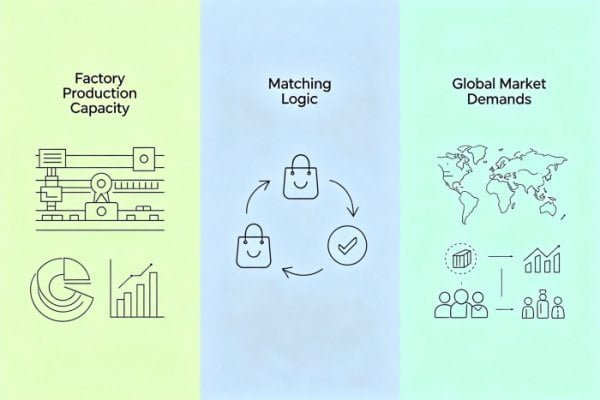
How To Match Markets To Your Factory Strengths
Europe Is Best If You Have:
✔ Strong documentation systems
✔ Sustainable material suppliers
✔ Social audit experience
✔ Small batch flexibility
USA Is Best If You Have:
✔ Large production capacity
✔ Strong delivery management
✔ Stable raw material supply
✔ Freight optimization systems
Asia Is Best If You Have:
✔ Excellent technical teams
✔ Strong QC systems
✔ Fast communication
✔ Stable long-term partnerships
Common Global Sourcing Mistakes
Mistake #1: Using One Product Strategy Everywhere
Every market behaves differently.
Mistake #2: Underestimating Compliance
Compliance mistakes are expensive.
Mistake #3: Ignoring Seasonal Calendars
Late deliveries equal lost revenue.
Mistake #4: Chasing The Largest Orders
Bigger isn't always more profitable.
Mistake #5: Not Specializing
The most successful factories dominate one or two regions.
Frequently Asked Questions
Which market is easiest for new factories?
North America.
Buyers prioritize performance and delivery.
Which market offers the highest profit margins?
Europe often generates the highest margins.
Which market has the strictest compliance requirements?
Europe.
Especially Germany and France.
Which market values long-term partnerships the most?
Asia.
Japan and Korea prioritize supplier relationships.
Which market orders the largest volumes?
North America.
Large seasonal orders are common.
Related Buying Guides
Continue exploring:
→ Tote Bag Wholesale Sourcing Guide
→ Tote Bag Design Guide
→ Tote Bag Printing Guide
→ Custom Tote Bags Buying Guide
→ The Ultimate Guide to Custom Puffer Tote Bags
Get Your Free Global Market Matching Report
Not sure which market fits your business?
Tell us:
- Your target country
- Your sales channel
- Your preferred materials
- Your annual purchase volume
We'll provide:
✔ Market recommendations
✔ Compliance requirements
✔ Material suggestions
✔ Production timelines
✔ MOQ recommendations
✔ Estimated pricing references
Response Within 12 Hours
Stop guessing global sourcing rules.
Work with an experienced manufacturing team to build a smarter and more profitable tote bag business.
👉 Contact our sourcing specialists today.
"EU REACH - International Trade Administration", https://www.trade.gov/eu-reach. REACH (Registration, Evaluation, Authorisation and Restriction of Chemicals) is the European Union regulation EC 1907/2006 that addresses the production and use of chemical substances and their potential impacts on human health and the environment, applicable to textile and bag products sold in the EU market. Evidence role: definition; source type: government. Supports: REACH is an EU regulation governing chemical substances in products including textiles. Scope note: Does not specifically quantify how commonly this is requested by buyers ↩
"Oeko-Tex - Wikipedia", https://en.wikipedia.org/wiki/Oeko-Tex. OEKO-TEX Standard 100 is one of the world's best-known labels for textiles tested for harmful substances, established by the International OEKO-TEX Association, which certifies that textile products have been tested for substances known to be harmful to human health at all stages of production. Evidence role: definition; source type: institution. Supports: OEKO-TEX is an independent certification system for testing textiles for harmful substances. ↩
"Global Organic Textile Standard: Home - GOTS", https://global-standard.org/. Organic cotton is grown without synthetic pesticides or fertilizers according to organic agricultural standards, typically certified by organizations such as the Global Organic Textile Standard (GOTS), which verifies both the organic status of fibers and environmental and social criteria throughout the textile supply chain. Evidence role: definition; source type: institution. Supports: Organic cotton is a certified agricultural product with specific production standards. Scope note: Defines organic cotton and its certification but does not verify specific European market demand data ↩
[…] → Global Tote Bag Wholesale Guide (2026) […]