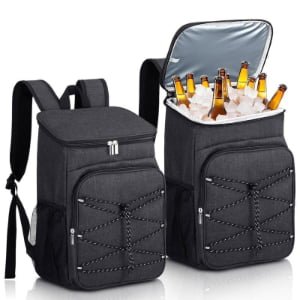
How to Turn Your Backpack Design Into a Real Product: The 2026 Sourcing Guide
Have an amazing backpack idea on paper but don't know how to turn it into a real product? You are not alone. Many startups, Amazon synchronization sellers, and apparel brands struggle with the exact same frustrating challenges: choosing suppliers based only on price, encountering inconsistent quality, and discovering costly design failures late in the game.
The key to successful backpack fabrication is matching your design's technical requirements with a manufacturer's specific capabilities before sampling. Working directly with an experienced factory cuts out middlemen, protects your profit margins, and ensures structural integrity.
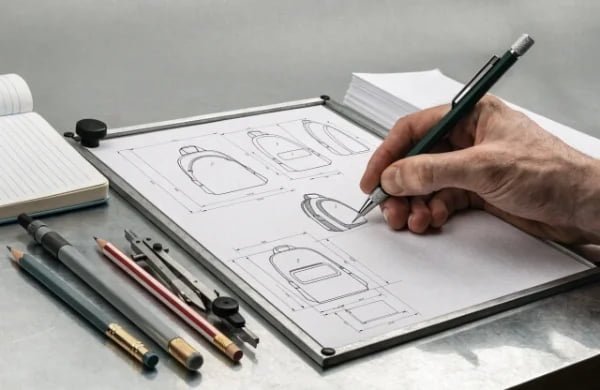
At Kai Bags, we've spent more than 20 years helping brands, wholesalers, and private-label companies transform sketches into market-ready backpack collections across the USA, Europe, and Australia. This comprehensive guide will show you exactly how to navigate the manufacturing process successfully.
Quick Answer: How Do You Manufacture a Backpack Successfully?
If you're short on time, focus on these four critical steps:
- ✓ Choose a factory with specialized technical equipment for your bag type.
- ✓ Never skip physical prototype validation before mass production.
- ✓ Match the factory's operational scale with your target order volume.
- ✓ Verify in-house multi-step quality control (QC) systems upfront.
Why Backpack Manufacturing Is Highly Technical
A modern backpack isn't just fabric and zippers; it is a piece of portable engineering. Consumers expect ergonomic weight distribution1, heavy-duty durability, and specialized functionality.
Depending on your design, your project may involve severe manufacturing complexities: anti-theft zipper tracks, foam lamination for device protection, water-resistant seam sealing, or intricate multi-compartment alignments. Choosing a supplier that lacks the right specialized machinery always leads to production failures and timeline disasters.
Step 1: Verify Technical Capabilities Before Comparing Quotes
Many factories look identical online, but their machinery tells a different story. A facility optimized for simple promotional grocery totes will struggle with a heavy-duty technical hiking backpack.
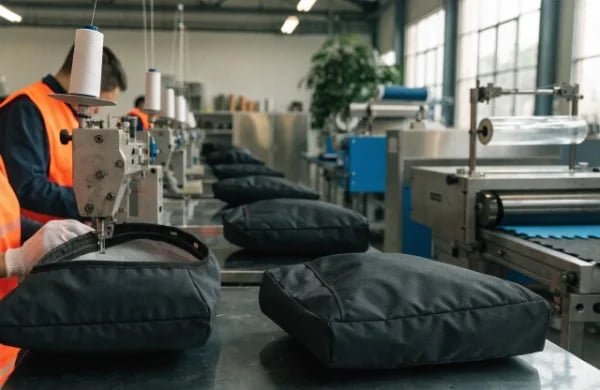
Matching Your Backpack Design Features with Factory Equipment
| Design Feature | Required Manufacturing Equipment | Critical Verification Question |
|---|---|---|
| Laptop Padding | Heavy-duty foam lamination machines | Can they process high-density EVA foam2 thickness? |
| Waterproof Shell | Premium seam tape sealing equipment | Do they perform real-world hydrostatic pressure testing? |
| Heavy-Duty Materials | Compound-feed industrial sewing machines | What is their maximum denier3 or fabric weight capacity? |
| Multiple Compartments | Automated precision pattern cutting cutters | How do they ensure symmetry and compartment alignment? |
| Anti-Theft Features | Specialized hidden zipper assembly setups | Can they secure complex concealed locking mechanisms? |
Step 2: Never Skip Prototype Development
Sampling is your ultimate insurance policy. A design may look perfect on a 2D screen or paper tech pack, but real-world testing catches structural flaws—such as padding compressing unevenly under load or stress points pulling apart—before they become expensive mass-production disasters.
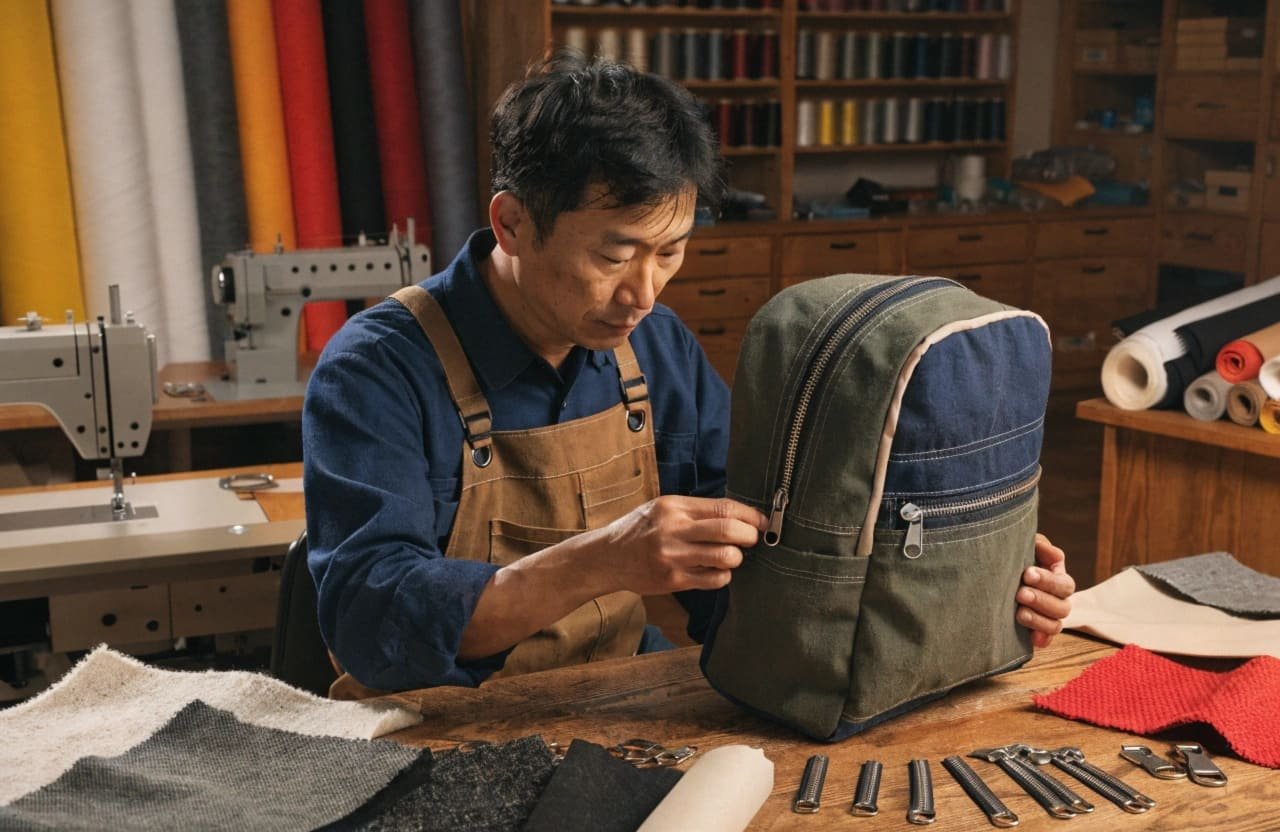
Prototype Engineering Evaluation Checklist
- Material & Hardware Stress Testing: Verifying zipper cycle durability, fabric tensile strength under heavy loads, and buckle impact resistance.
- Stitching & Structural Assembly: Inspecting bartack reinforcements at shoulder strap anchor points and checking interior binding clean finishes.
- Ergonomics & User Experience: Evaluating weight distribution balance, strap comfort during extended wear, and convenient access to hidden pockets.
Pro Factory Tip: Expect 2–3 sample iterations for highly complex or technical designs. An initial investment of approximately $50–$150 on sample development can save you thousands in rejected, unsellable production batches later.
Step 3: Match Factory Scale With Your Order Volume
Mismatched factory scale leads to inflated costs, quality volatility, or your project being deprioritized. Align your order size with the right manufacturer type:
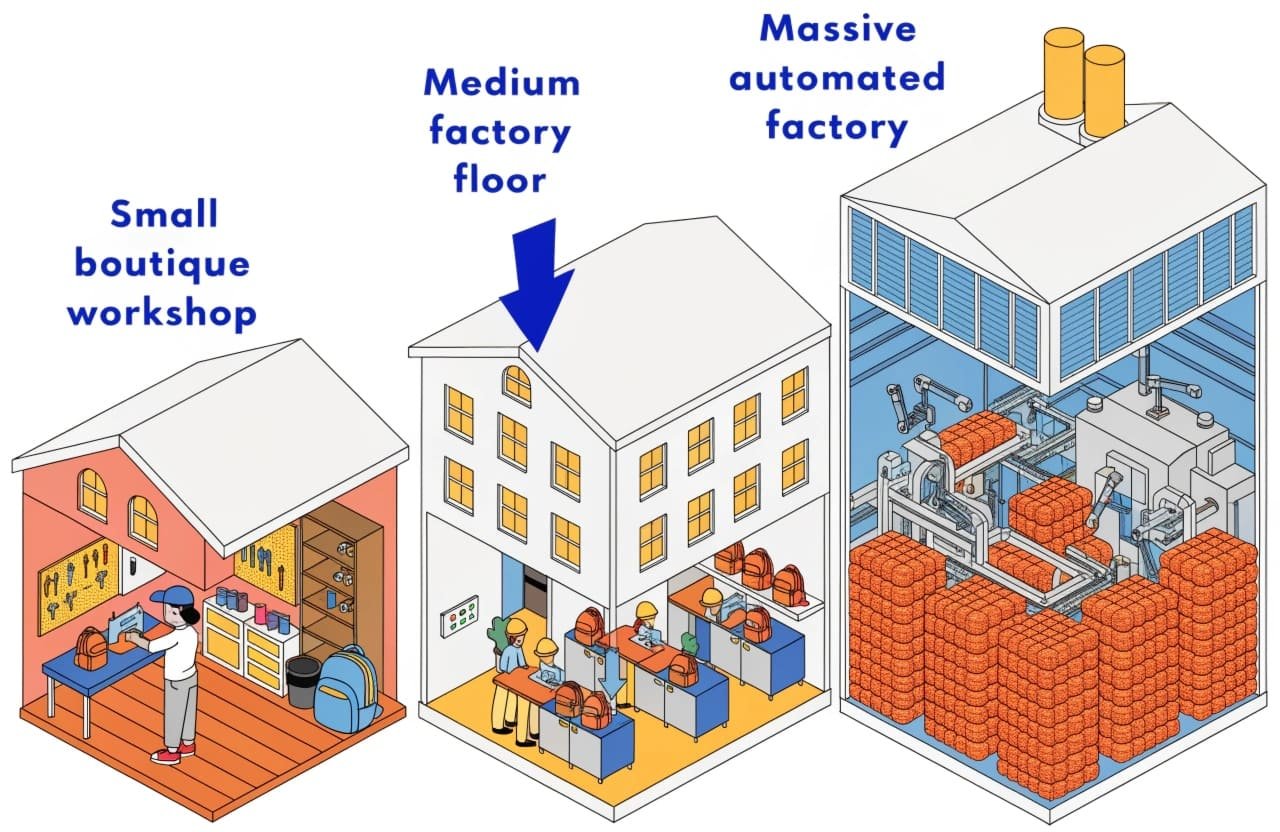
- For 300 – 1,000 Pieces (Small to Medium Manufacturers): Best for startups and boutiques. You receive faster direct communication, greater flexibility, and the personalized engineering attention your new brand needs.
- For 1,000 – 5,000 Pieces (Mid-Sized Factories - Our Sweet Spot): Delivers optimal balance. You secure highly stable automated quality systems, better bulk component pricing, and dedicated lines that take your business seriously.
- For 5,000+ Pieces (Large-Scale Manufacturers): Ideal for established retail chains. Maximizes economies of scale and complex multinational logistics support, though smaller custom adjustments become difficult to implement.
Typical Backpack Sourcing Reference Pricing (FOB China)
Please note: Final per-unit pricing depends heavily on material denier, exact hardware selections, branding methods (embroidery, silicone patches, screen print), and final packing requirements.
| Product Category | Minimum Order Quantity (MOQ) | FOB China Reference Price Range |
|---|---|---|
| Basic School / Promotional Backpack | 300 PCS | $3.00 – $5.00 |
| Standard Business Laptop Backpack | 500 PCS | $4.00 – $7.00 |
| Multi-Functional Travel Backpack | 500 PCS | $5.00 – $10.00 |
| Premium Technical / Outdoor Backpack | 500 PCS | $8.00 – $12.00+ |
How We Control Quality: Our Multi-Stage Inspection Protocol
To completely eliminate product returns and safeguard your brand reputation, our facility enforces a rigorous in-house quality control matrix across the entire production cycle:
- Incoming Material Inspection (IQC): We test all incoming fabrics for colorfastness, inspect zipper glide smoothness, and verify foam sheet density before anything hits the cutting floor.
- In-Line Assembly Inspection (IPQC): Our QC supervisors inspect stitching accuracy, alignment symmetry, and reinforcement bartacks right at the sewing stations mid-production.
- Final Pre-Shipment Audit (OQC): Every single backpack undergoes 100% manual testing of all zippers, structural pull tests on straps, compartment verification, and final compliance packaging checks.
Why Global Buyers Partner With Kai Bags
We do not simply take orders—we operate as a strategic extension of your product development team, eliminating supply chain risks before fabric cutting begins.
Factory Capability Snapshot
| Capability Item | Factory Specifications & Standards |
|---|---|
| Manufacturing Experience | 20+ Years in Technical Bag Production |
| OEM & ODM Service | Available (From rough sketches to full tech packs) |
| Flexible Production MOQ | Starting From 300 PCS Per Design |
| Sample Lead Time | 5 to 7 Working Days for Physical Prototypes |
| Production Lead Time | 20 to 35 Days (Depending on batch complexity) |
| Advanced Equipment | 40+ Machines (Foam composite, pattern cutting, industrial sewing) |
| Main Target Markets | USA, Europe, Australia, and Global Retail Chains |
| International Audits | Fully Certified BSCI Compliant Facility |
Frequently Asked Questions (FAQ)
Q1: Can your factory manufacture a backpack from just a rough sketch?
A: Yes! Our in-house design team routinely transforms basic concept sketches, reference photos, or partial ideas into production-ready digital tech packs and physical prototypes.
Q2: Do you sign Non-Disclosure Agreements (NDAs)?
A: Absolutely. Intellectual property protection is a core standard at our factory. We execute binding NDAs before you share any custom design files or artwork assets.
Q3: Can you ship products directly to Amazon FBA warehouses?
A: Yes. We are fully equipped to handle inner polybagging, FNSKU barcoding, master carton labels, and palletized shipping configurations in strict compliance with Amazon's logistical requirements.
Ready to Turn Your Backpack Idea Into a Market-Ready Product?
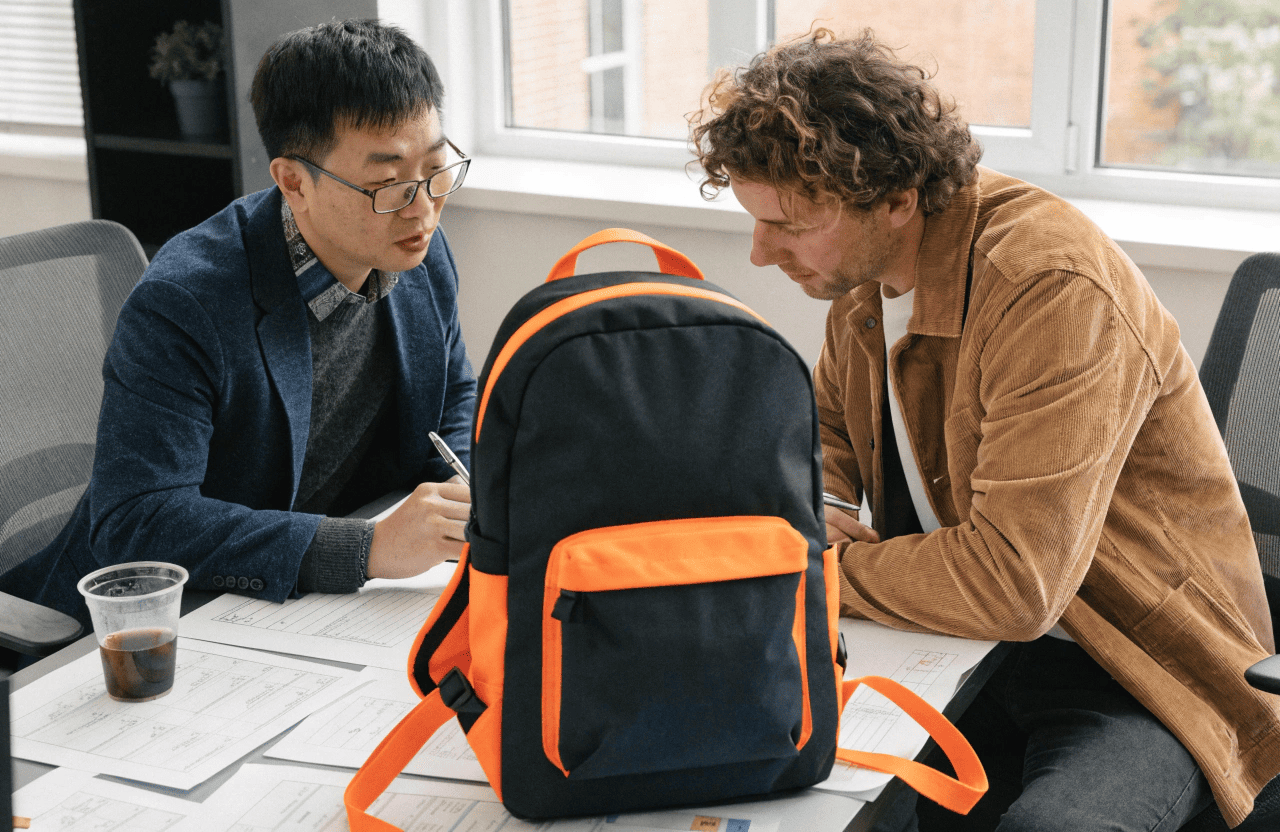
Building a successful backpack brand requires more than just finding a cheap sewing workshop—it requires a dependable, technically capable manufacturing partner. Whether you are launching a private-label startup or expanding a major retail line, our engineering team is here to streamline your supply chain.
Contact Kai Bags Today For:
- ✓ Factory-Direct Wholesale Pricing & Tech Pack Audits
- ✓ Technical Material & Hardware Performance Recommendations
- ✓ Rapid Pre-Production Prototype Engineering
- ✓ Strict BSCI-Compliant Manufacturing Documentation
- ✓ Amazon FBA Logistical Preparation Support
Tell us your design idea today, and let’s build a high-margin backpack collection your customers will love!
"Impact of Backpacks on Ergonomics: Biomechanical and ... - PMC", https://pmc.ncbi.nlm.nih.gov/articles/PMC9180465/. Biomechanical research demonstrates that proper weight distribution in backpacks reduces spinal loading and improves postural stability during carrying, with load positioning close to the body's center of mass being a critical design factor. Evidence role: mechanism; source type: research. Supports: Ergonomic principles for load distribution in backpack design. Scope note: Research typically focuses on specific load ranges and user populations rather than all backpack types ↩
"Ethylene-vinyl acetate - Wikipedia", https://en.wikipedia.org/wiki/Ethylene-vinyl_acetate. Ethylene-vinyl acetate (EVA) foam exhibits closed-cell structure with excellent shock absorption, flexibility, and durability characteristics, making it suitable for protective padding applications where impact resistance and lightweight properties are required. Evidence role: mechanism; source type: encyclopedia. Supports: Material properties of EVA foam for protective applications. Scope note: Specific protective performance depends on foam density, thickness, and compression characteristics rather than material type alone ↩
"Units of textile measurement - Wikipedia", https://en.wikipedia.org/wiki/Units_of_textile_measurement. Denier is a unit of measurement indicating the linear mass density of fibers, defined as the mass in grams per 9,000 meters of fiber, with higher denier values indicating thicker, heavier fibers that generally produce more durable and abrasion-resistant fabrics. Evidence role: definition; source type: encyclopedia. Supports: Denier as a textile measurement unit. Scope note: Denier measures fiber weight rather than fabric strength directly; fabric construction (weave, coating) also significantly affects performance ↩