
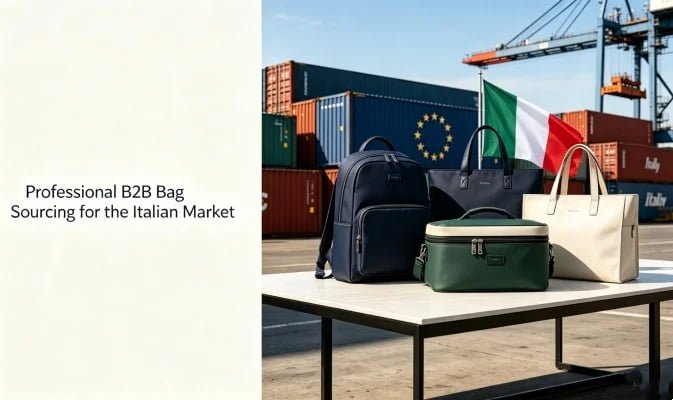
Italy Import Tariffs for Bags in 2026: How Smart Customization Protects Your Profit Margins
For Italian wholesalers, retailers, distributors, and private label brands, importing bags from China remains one of the most cost-effective sourcing strategies in 2026.
However, many buyers are asking the same question:
"How much import duty will I pay when importing bags and luggage into Italy?"
The answer is simple: most commercial bag imports from China are subject to both import duty and Italian VAT.
But experienced buyers understand something even more important:
Tariffs are not the biggest threat to profitability.
The real danger is importing generic products that compete only on price.
A 9.7% tariff can be absorbed and recovered. A low-value product with no differentiation cannot.
That's why successful Italian brands focus on customized, higher-value products that generate stronger retail margins and make tariff costs almost irrelevant.
In this guide, we'll explain Italy's 2026 import tariff structure, show a real landed-cost calculation example, and reveal how smart OEM/ODM customization helps buyers protect and increase profits.
Why Tariffs Matter — But Aren't the Real Problem
As an EU member state, Italy follows the EU Common Customs Tariff (TARIC) system1.
For most textile-based bags imported from non-EU countries such as China, importers generally face:
- Import Duty (Customs Tariff)
- Italian Import VAT (22%)
- Customs Clearance Charges
Naturally, these costs affect landed pricing.
However, let's look at the bigger picture.
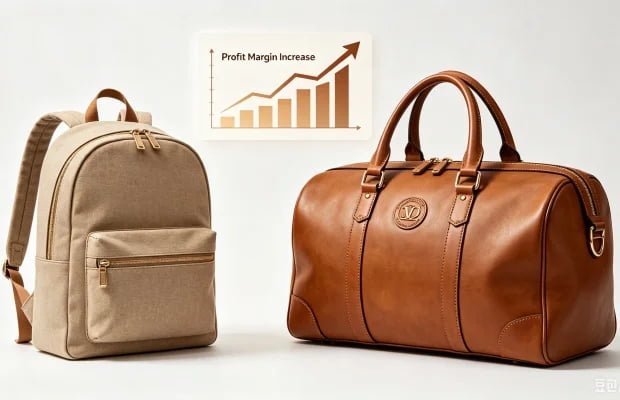
Imagine two importers:
Importer A: Generic Products
- Buys standard backpacks at the lowest possible price
- Competes with dozens of similar sellers
- Constantly lowers prices to win orders
- Earns very limited margins
Importer B: Customized Products
- Imports branded private-label bags
- Adds unique functions and premium materials
- Sells at significantly higher retail prices
- Maintains healthy profit margins despite tariffs
Both companies pay the same customs duty.
Only one protects profitability.
The lesson is simple:
Tariffs increase costs.
Commodity products destroy margins.
For long-term success in the Italian market, value creation matters far more than tariff avoidance.
How Successful Italian Brands Offset Tariff Costs
Leading European brands rarely compete solely on price.
Instead, they increase product value through customization, branding, and functional innovation.
This is where a professional OEM/ODM bag manufacturer becomes a strategic partner.

Private Label Branding
Create products customers recognize and trust through:
- Embroidered logos
- Woven labels
- Rubber patches
- Metal logo plates
- Custom packaging
A branded product can often command a retail price 30%–100% higher than a generic products.
Functional Upgrades That Justify Premium Pricing
Italian consumers increasingly value functionality.
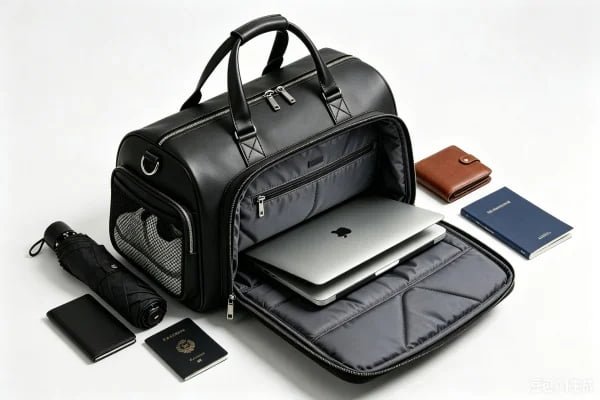
Popular custom features include:
- Wet & dry separation compartments
- Independent shoe pockets
- Anti-theft hidden pockets
- RFID protection
- Laptop protection systems
- Waterproof inner linings
These features increase perceived value while adding only a small production cost.
Premium Materials and Hardware
Material upgrades significantly improve market positioning.
Options include:
- RPET recycled fabrics
- Premium PU leather
- Waterproof polyester
- High-density canvas
- Reinforced zippers
- Customized metal accessories
When customers perceive higher quality, they focus less on price and more on value.
Customized Packaging for Brand Growth
Packaging plays a critical role in retail success.
We offer:
- Gift boxes
- Hangtags
- Barcode labels
- Polybags
- Retail-ready packaging solutions
Strong presentation increases perceived product value and supports higher margins.
Real Example: Calculating Italy Import Duty and VAT
To understand the actual impact of tariffs, let's examine a typical wholesale order.
Order Details
- Product: Custom Polyester Travel Duffel Bags
- HS Code: 4202.12.912
- Quantity: 1,000 pcs
- FOB Product Value: €10,000
- Freight & Insurance: €1,500
- Import Duty Rate: 9.7%3
- Italian VAT Rate: 22%
Step 1: Calculate CIF Value
CIF = Product Cost+ Shipping/Insurance
CIF = €10,000 + €1,500 = €11,500
Step 2: Calculate Import Duty
Import Duty = CIF Value X Tariff Rate
Import Duty = €11,500 X 9.7% = €1,115.50
Step 3: Calculate VAT Base
VAT Base = CIF Value + Import Duty
VAT Base = €11,500 + €1,115.50 = €12,615.50
Step 4: Calculate Italian Import VAT
Import VAT = VAT Base X 22%
Import VAT = €12,615.50 X 22% = €2,775.41
Total Landed Cost
| Cost Item | Amount |
|---|---|
| CIF Value | €11,500 |
| Import Duty | €1,115.50 |
| Import VAT | €2,775.41 |
| Total Taxes | €3,890.91 |
| Final Landed Cost | €15,390.91 |
Important Takeaway
For many VAT-registered Italian companies, import VAT can typically be recovered through normal tax procedures.
However, the import duty remains a direct, non-refundable product cost.
This is why higher-value products and stronger branding are essential for maintaining healthy margins.
2026 Italy Tariff Reference Table for Common Bag Categories
Most bags imported into Italy fall under HS Code Chapter 4202.
The following categories represent the most common wholesale bag imports.
| Product Category | Typical HS Code | Main Material | Indicative Duty Rate |
|---|---|---|---|
| Custom Backpacks | 4202.92.91 | Nylon / Polyester | 9.7% |
| Travel Duffel Bags | 4202.12.91 | Synthetic Textile | 9.7% |
| Gym & Sports Bags | 4202.92.98 | Canvas / Polyester | 9.7% |
| Custom cooler bags | 4202.92.19 | Foil / Textile | 9.7% |
| Tote Bags | 4202.22.90 | Canvas / Cotton | 9.7% |
| Leather Tote Bags | 4202.22.90 | Leather | 3.7%4 |
| Cosmetic Bags | 4202.92.15 | Plastic / Textile | 9.7% |
Final duty rates depend on official customs classification and product construction.
Why Italian Buyers Choose Our Factory
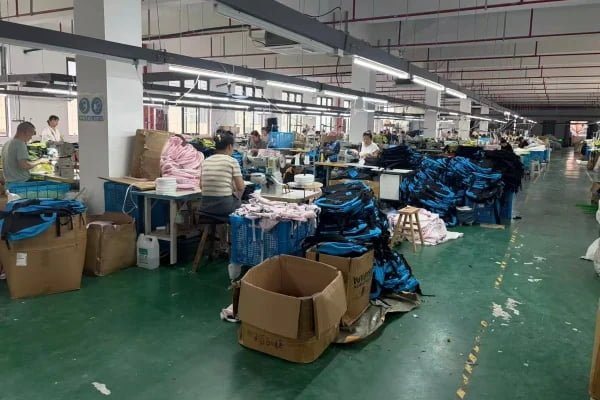
With more than 20 years of manufacturing experience, we help brands, wholesalers, distributors, and promotional companies develop custom bag collections for the European market.
Our services include:
OEM & ODM Development
From initial concept sketches to final production.
Full Customization Support
- Logo customization
- Material selection
- Hardware upgrades
- Structural modifications
- Packaging solutions
Strict Quality Control
Every order passes through comprehensive inspection procedures before shipment.
Flexible Shipping Options
We support:
- FOB
- CIF
- DDP (Delivered Duty Paid)
For customers choosing DDP service, we handle customs clearance and import procedures, simplifying the entire sourcing process.
Frequently Asked Questions
Do I have to pay import duty when importing bags into Italy?
Yes. Most commercial bag imports from non-EU countries are subject to customs duty and Italian VAT.
What is the standard VAT rate in Italy?
Italy currently applies a standard 22% VAT rate on imported goods.
Can Italian companies recover import VAT?
In many cases, VAT-registered businesses can reclaim import VAT according to local tax regulations.
Which bag categories have the highest import duty?
Most textile-based bags under Chapter 4202 commonly fall around the 9.7% duty level.
How can I reduce the impact of import tariffs?
The most effective strategy is increasing product value through branding, customization, premium materials, and functional innovation rather than competing solely on price.
Ready to Increase Your Margins in 2026?
Import tariffs are part of international business.
The companies that continue growing are those that transform ordinary products into premium branded solutions that customers willingly pay more for.
Whether you're sourcing backpacks, travel bags, gym bags, cooler bags, tote bags, or cosmetic bags for the Italian market, our team can help you develop products that stand out and generate stronger profits.
Need a custom bag manufacturer? Contact our bag sourcing team today for a free quotation.
"European Union Customs Union - Wikipedia", https://en.wikipedia.org/wiki/European_Union_Customs_Union. Official EU customs documentation confirms that Italy, as an EU member state, applies the Common Customs Tariff through the TARIC system for imports from non-EU countries. Evidence role: general_support; source type: government. Supports: Italy's participation in the EU Common Customs Tariff system. ↩
"[PDF] Harmonized Tariff Schedule of the United States Revision 9 (2026)", https://hts.usitc.gov/reststop/file?release=currentRelease&filename=Chapter%2042. The World Customs Organization's Harmonized System classifies certain travel bags and similar containers under HS code 4202.12, with specific subcategories based on material composition. Evidence role: definition; source type: government. Supports: HS code classification for travel duffel bags. Scope note: Exact classification depends on specific product characteristics and materials used ↩
"4202.22.40.30 - Harmonized Tariff Schedule", https://hts.usitc.gov/search?query=4202.22.40.30. The EU's TARIC database indicates that certain textile bags under HS code 4202 are subject to customs duties, with rates varying by specific product classification and country of origin. Evidence role: statistic; source type: government. Supports: Current EU customs duty rate for specific bag categories. Scope note: Actual rates may vary based on precise product specifications and trade agreements ↩
"4202.99.10.00 - Harmonized Tariff Schedule", https://hts.usitc.gov/search?query=4202991000. EU customs tariff schedules show preferential duty rates for certain leather goods compared to synthetic materials, reflecting different tariff treatment based on material composition. Evidence role: statistic; source type: government. Supports: EU customs duty rates for leather bags. Scope note: Specific rates depend on detailed product classification and may vary by country of origin ↩